News
News
News
News

10 March 2016

LUISS Career Day for International Organizations - 4th edition

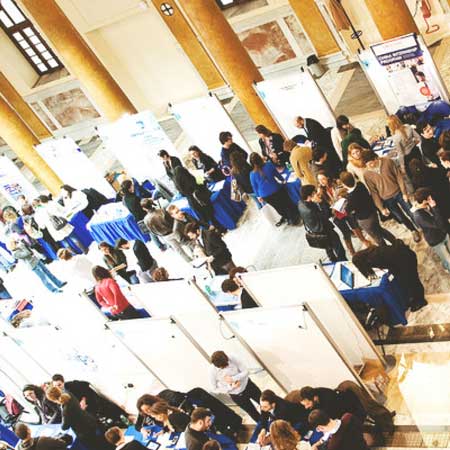
The Fourth Annual Edition of the LUISS Career Day for International Organizations will take place on March 31, 2016, from 10:00 a.m. to 4:00 p.m. at LUISS Guido Carli, Viale Romania 32. Why join the Career Day for International Organizations?  This international career day will allow you to find out about professional opportunities, meet with representatives of international organizations operating abroad, and exchange ideas regarding your professional goals. The aim of this fair is to create the possibility of interaction between students, graduates and international organizations. Moreover, students and graduates will have the opportunity to ask questions and meet the representatives of international businesses which operates at the global level. The fair will consist of informative desks, set up by prestigious international entities as U.N. agencies, various international organizations and NGOs, research centers and think tanks. If you wish to enhance your professional experiences, you are welcome to participate! How to prepare The following guidelines should be followed: Formal dress code Be informed about the importance and the actual commitments of national and foreign organizations Prepare some specific questions for the different representatives Remember to bring with your most updated resume (both in English and Italian) Don't miss this opportunity and stay tuned for further information! The following organizations will take part: Amnesty International - Sezione Italiana Amref Health Africa Onlus CeSI - Centro Studi Internazionali Comitato Italiano per l'UNICEF - Onlus Commissione Europea - Rappresentanza in Italia COSPE onlus CRI - Croce Rossa Italiana ECPAT ITALIA ONLUS Emergency FOCSIV ICC ITALIA - Camera di Commercio Internazionale Comitato Nazionale Italiano IDLO (International Developement Law Organization) International Fund for Agricultural Developement (IFAD) INTERSOS - Humanitarian Organization ISTITUTO AFFARI INTERNAZIONALI (IAI)  Legambiente Onlus Medici Senza Frontiere Onlus Presidenza del Consiglio dei Ministri - Dipartimento della Gioventù e del Servizio Civile Nazionale Save The Children Italia Onlus Servizio Civile Internazionale Italia SOS Il Telefono Azzurro Onlus Susan G.Komen Italia The World Bank Group UN/DESA Department of Economic and Social Affairs - Office in Rome UNHCR - The UN Refugee Agency UNIDO ITPO Italy - United Nations Industrial Developement Organization - Investment and Technology Promotion Office in Italy World Food Programme UNICRI Carriere internazionali 

24 February 2016

Corporate managers and the Business School together for the Master in Corporate Finance

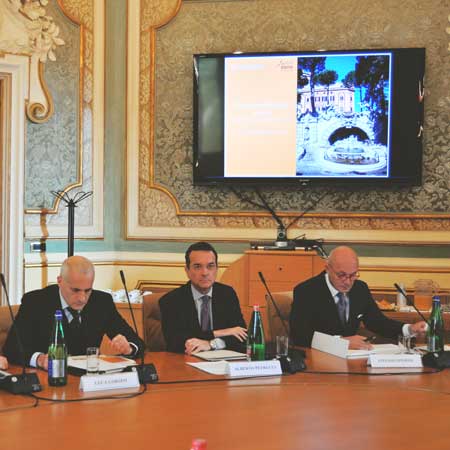
Friday, January 22 took place the meeting of the Corporate Advisory Board of the Master in Corporate Finance, chaired by its scientific director Alessandro Pansa. The Board includes important managers as: Stefano Siragusa, CEO and General Manager - Ansaldo STS Stefano Speroni, Partner - Dentons Europe Marco Vulpiani, Equity Partner - Head of Valuation Services - Deloitte Financial Advisory S.r.l. Giuliano Guarino, Director - Lazard Alessandro Frezza, Transaction Advisor Service Leader, Italian Geography Market - Partner - EY It involves different professional skills (University professors, professionals, managers, managers of public institutions) all excellent, with the goal of making different experiences together as part of a training process characterized by the integration between theoretical foundations and application of best practices in financial management. The meeting aimed to define and agree on guidelines that each professor of the Master will use to develop its own module of instruction: in order to ensure consistency in the teaching process and prerequisites between the courses of the programme, however at the same time to enhance the cultural differences – that in our view constitute a value for students – which necessarily derive from different career paths. The Board stressed the importance of supporting the teachings of strict economic and financial courses with some related to legal, administrative and Governance aspects, so as to take advantage of the benefits that always arise from some level of multi-disciplinarily. It was also restated the importance of developing the course entirely in English, to facilitate the integration of students of LUISS Business School in the world of work without any borders and very competitive. The Master started its journey on  January 27th with preparatory courses such as Fundamentals of Business, Statistics and Accounting, to develop shortly through the deep interweaving of finance subjects ranging from Public Finance to Corporate Banking and Capital Markets. Selected students, some of which with international backgrounds, have the profound ambition to learn the business and professional skills to fit into a company that can highlight and enhance the skills acquired during the academic program. Their training takes them not only through the mechanism of Corporate Finance-related modules but also through a series of workshops that will form their Soft Skills, Project Management skills and, above all, the important essential entrepreneurial attitudes. The Board’s wish was to incorporate this new edition in the wave of success as the previous, with the commitment to create an environment in order for students to take advantage of the Master for an interesting, fast and ambitious start of their professional lives. Watch the Interviews

16 February 2016

Call for Expressions of Interest Megaprojects: Innovation, learning, and design

To identify and develop new theoretical and applied research on mega-projects, LUISS Business School has the pleasure to host the 4th International Mega-Projects Workshop. The workshop brings together scholars and practitioners to further understanding of mega-projects: it allows established and emerging scholars to present their work, interact with other scholars studying related topics, transfer lessons learned across mega-projects and to the participating organizations, and hear the latest trends in mega-projects research. We call for expressions of interest to present though provoking ideas that can spur debates and develop research questions on the mega-project phenomenon. As the workshop connects theory with practice, we encourage papers that combine theoretical grounding with phenomenon-driven questions that can shape practice. Potential topics include, but are not limited to: What are key challenges in managing mega-projects? How can those challenges be overcome? What drives high-performing mega-projects? How might they be different across industries? How can we measure mega-project’s performance and how might this change over the lifecycle of the project? How does the role of mega-project constituencies influence their definition of performance? How can actors transfer lessons learned from one project to another and into their respective organizations? How do the economic and political contexts in which mega-projects are situated influence their performance? What are the different alternatives for the design of mega-project organization? What collaboration models and capabilities enhance and improve the quality of innovation?  Speakers: Raymond Levitt, Professor of Civil and Environmental Engineering at Standford University; Director of Global Projects Center and Academic Director ofStanford Advanced Project Management Program  Gernot Grabher, Professor of Urban and Regional Economic Studies at the HafenCity University Hamburg Mark Thurston, Regional Managing Director at CH2M, world’s leading consulting company on complex infrastructure, megaprojects and natural resource problems. He has been involved in some of the UK’s most important and recent megaprojects, London Olympic Games 2012 and Crossrail, Europe’s largest infrastructure project. In addition to research papers, the conference seeks to engage project managers to understand and discuss future research on the key challenges they face today. Please do not hesitate to submit an expression of interest (through an extended abstract or a draft paper) in participating and presenting your work to Francesca Di Pietro (fdipietro@luiss.it) before 15 March 2016. Authors will be notified whether their papers have been accepted for the Workshop by 15 April 2016. The 4th International Mega-projects Workshop is sponsored by the Project Management Institute, therefore the participation for accepted authors does not carry any fees. We look forward to welcoming you in Rome! Scientific Committee Andrew Davies (c.davies@ucl.ac.uk) Professor of Management of Projects in the School of Construction and Project Management, the Bartlett Faculty of the Built Environment, University College London Nuno Gil (Gil@mbs.ac.uk) Professor of New Infrastructure Development Manchester Business School (co-organizer) Niels Noorderhaven (g.noorderhaven@tilburguniversity.edu) Professor, Department of Management, Tilburg School of Economics and Management Andrea Prencipe (aprencipe@luiss.it) Professor of Organisation and Innovation, Department of Business and Management, University LUISS Guido Carli, Rome, Italy (local organizer) Jonas Søderlund (soderlund@bi.no) Professor, Department of Leadership and Management, BI Norwegian Business School Organising Committee Mariangela Barbuzzi (mbarbuzzi@luiss.it) Project Coordinator, Executive Education, LUISS University, Rome, Italy Francesca Di Pietro (fdipietro@luiss.it) Post-doc Researcher, Department of Business and Management, LUISS University, Rome, Italy Richard Tee (rtee@luiss.it) Assistant Professor, Department of Business and Management, LUISS University, Rome, Italy Francesca Vicentini (fvicentini@luiss.it) Assistant Professor, Department of Business and Law, LINK Campus University, Rome, Italy AGENDA

04 February 2016

MBA Sport Games: from business competition to sport competition! The first edition of a sport competition among MBA students of international business schools

Experience your limits! In the beautiful  setting of Rome, MBA students from International business schools will challenge each other in an amazing sport competition, MBA Sport Games. Each Business School will select a 13-players team which will compete in 5 different sport categories: futsal, streetball, badminton; triathlon and rely swimming. The tournament will take place at the “Giulio Onesti” High Performance Training Center of the CONI (Italian National Olympic Committee), a unique location acquired thanks to the support and the patronage of CONI. The teammates will face the challenges with great team-work spirit and scarce resources (some players will participate to more than one discipline). Participants will be lodged at the “Giulio Onesti”, where LUISS Business School staff and CONI staff will welcome them. The sport kermesse will begin with the knockout stage, a Sport Management session at LUISS Business School and the final matches on Saturday together with the closing ceremony. MBA SPORT GAMES is at its first edition and will hopefully become a yearly appointment among international Business Schools. It is a unique opportunity to foster teamwork, result-oriented approach, strategic vision, and the values of strong competition. The tournament will be presented at LUISS Business School  next February 9, at 5:30 pm with some special guest speakers: Alberto Miglietta, CEO CONI Servizi, Diana Bianchedi, former Olympic fencer and General Coordinator of Roma 2024, and Massimiliano Rosolino, former European, Worlwide and Olympic champion. Experience your limits, enjoy MBA Sport Games! Discover the program of the event Register your dream team as Business School 04 February 2016

25 January 2016

Women on corporate boards and company performance

Edited by People Management Competence Centre & Lab “The world is looking to Norway”, this is what an Italian newspapers announced in 2011 (La Repubblica, 2011). Indeed, Norway was the first country to introduce a law regulating gender balance on corporate boards. Ambitions about achieving gender balance in the upper echelons of Norwegian companies had existed for a long time. “However, any advances in increasing the number of women on corporate boards had little visible effects. In 1992, only 4 percent of the members of boards in corporations listed on the Oslo Stock Exchange were women, and in 2002 this figure had increased to only 6 percent despite efforts made” (Machold, Huse, Hansen, and Brogi, 2013 p. 1). This was the background for the Norwegian law on gender balance in corporate boards, and in 2008 about 40 percent of the board members in Norwegian publicly traded companies were women. The snowball starting in Norway is growing, and the effects seem to be accelerating, leading one country after another to follow the Norwegian example (Machold, Huse, Hansen, and Brogi, 2013). The most important lesson to be learnt from Norway is that even in a country where a gender-balance attention is well established, it was necessary to introduce a law in order to make significant increases in the number of women on boards. In Italy, the turning point came with the introduction of the Law 120/2011, the so called Golfo-Mosca Law (from the name of the promoters). The Law requires that boards (executives and non-executives) of publicly-listed companies and state-owned companies have at least 33% of female by 2015 and sets a target of 20% for the transition period. Four years after the law, the question we ask is this: does the increasing number of women on corporate boards improve organizational performance? According to several studies carried out by research institutes and consulting firms, most HR managers and HR professionals believe that having a good gender balance on boards conveys several key benefits to the organization, such as bringing different perspectives to decision-making, reflecting the wider diversity in society, etc. (see Figure 1). Fig. 1: CIPD Report 2015 Moreover, according to CEB SHL Talent Report 2013, the difference in the leadership potential of women and men is less than 1% in favour of women. This means that the pool of female potential leaders is not smaller as compared to the male pool. However, more than 60 percent of leadership positions are filled by men (Figure 2). Fig. 2: Leadership Potential – broken down by gender - Source: CEB - The 2012 Talent Report The effects of diversity (age, gender, cultural, ethnical)  on individual, group, and organisational performance have been widely investigated also in management literature and evidences are highly interesting. Some scholars solicited a reflection on potential negative effects of diversity in terms of conflict worsening, poor communication, and a reduction of group cohesion. On the other side, some scholars showed how diversity may increase creativity, innovation, decision making and, hence, performance. A recent study produced at St. Gallen University on a large sample of banks showed a positive and strong relation between gender diversity and perfomance, over 15 years. According to Reinert et al. (2015) women's contribution to firm's performance appears to be particularly valuable in times of crisis: they found that a 10% increase in the number of women in top management positions produced an increase on ROE greater than 3% per year, and this impact doubled in the years of severe crisis. There is another important study, published in 2012, which helps in understanding the rational of this positive relationship (Dezső & Ross, 2012). According to the results of this research carried out on 1,500 companies over a period of 15 years, the presence of female top managers increases the performance of (both top and middle) management, and by this means also firm's performance. Women, indeed, thanks to their different life experiences, contribute to management team with additional insights on some strategic issues, and in particular those on female business partners, customers, employees. More generally, heterogeneous groups benefit from different views, consider a wider set of possible solutions, debate the views of others with greater force, thus leading to higher quality decisions, especially when (as for decisions by top management teams) the task requires to analyze and process lots of information. It is true that diversity can also reduce social cohesion, engender conflicts, and reduced comfort within the group, but not necessarily this may result in a lower performance; on the contrary, it may generate better decisions, especially when they are "non-routine decisions", as in the case of Board ones. In those cases, benefits from gender diversity seem to outweigh its costs. Moreover, according to this study, the positive impact of women in the Top Management Team is not limited to the performance of the team but is extended to other levels of the organization. At some stages of career progression, in fact, mentoring relationships and other supportive relationships can be very important; since these social relations are strongly influenced by the similarity on certain social factors such as gender, the scarcity of women in top management can become a barrier to career opportunities for women. On the contrary, women in positions of senior management seem to be more sensitive than their men colleagues to growth of their employees, encouraging them to express their full potential. Therefore a woman should strongly believe that the presence of other women colleagues in senior management roles can increase her real career opportunities; this condition can positively affect motivation and commitment of women at all organizational levels. Finally, the results of this research show that the benefits of gender diversity in top management team are visible only in certain contexts, namely in those tasks that require creative solutions, such as in innovative processes based on the recombination of unique resources and competences. As a consequence the women presence on boards would be particularly important in those companies where innovation represents a key component of the strategy and, then, of managerial behaviours (Figure 3). Fig. 3 - Source : Dezső & Ross, 2012 According to these considerations, perhaps there isn’t a single answer to the question that we asked ourselves, as more and more evidences lead us to believe that the impact of diversity on performance depends on some contextual factors such as organizational culture and strategy, and HRM practices adopted (Figure 4). For example, the impact of diversity on performance will be positive when managers and their collaborators, are able to rely on the creativity and wealth of information; when they are coached, through cultural awareness and adequate HRM practices to deal with the complexity related to taking decisions or communicate in a very heterogeneous team. If this is true, then we have to accept – in a managerial perspective - the fact that gender diversity creates value if there are some contextual factors, that are able to take out its potential. And since diversity is a feature of the labor market and a social value, then companies have to gear up to create an inclusive organizational culture, and develop the skills needed to generate value from diversity. Figure 4: Diversity effects on performance Source: Kochan et al. 2003 Surely, having set percentages of women participation on Boards represents a key step, since it helps in creating an open and supportive culture, triggering a cascade effect that, over time, will ingender benefits on all organizational levels. Four years after the introduction of law on installments to women participation on Boards data shows that even in Italy, the effect has been high and the number of women on Boards has significantly increased (Fig. 5). However to generate a real impact, top management must ensure a visible commitment. Moreover, as it is true that "you can not manage what you do not measure," it is extremely important to adopt a more analytical approach on this issue and collect and analyze corporate data, monitor gender profile, and ensure greater transparency on these data. Finally, it is important to adopt policies to support gender diversity in the recruitment and selection process, in the design of career and in the adoption of work-life balance initiatives. Fig.5: Women on Corporate Boards (%) – Source: Credit Suisse, 2014 References Burke Eugene et al. "Big Data Insight e Analisi della forza lavoro globale", The SHL Talent Report, 2014. CIPD, "Gender diversity in the boardroom: Reach for the top", Survey Report, Feb. 2015. Dezsö, Cristian L., and David Gaddis Ross. "Does female representation in top management improve firm performance? A panel data investigation." Strategic Management Journal9 (2012): 1072-1089. Kochan, Thomas, et al. "The effects of diversity on business performance: Report of the diversity research network." Human Resource Management1 (2003): 3-21. Machold, Silke, et al., (eds). "Getting women on to corporate boards: A snowball starting in Norway". Edward Elgar Publishing, 2013. Reinert, Regina M. et al. "Does female management influence firm performance? Evidence from Luxembourg banks", Working Papers on Finance n. 2015/1, Swiss Institute of Banking and Finance (S/BF – HSG), Jan. 2015. 25 January 2016

14 January 2016

The managerial perspective of the wellness industry

The 10th edition of the Executive Wellness Management course will start on January 21, 2016. It is a training project which aims to provide the skills and develop the conceptual tools to deal with the wellness services during their life cycle with an economic and managerial perspective. Potential participants are those who engage or intend to engage in management positions at health clubs, beauty centers, rehabilitation centers, medical spa, and fitness facilities of the same type placed in hotels, resorts, companies and healthcare organizations. To respond to the evolution of the industry, these figures require to: combine strong managerial skills in the areas of enterprise management (organization, strategy, administration and accounting), with industry-specific knowledge (technical aspects, market dynamics, characteristics of different sectors of wellness and related services, facilities, products) and with knowledge of "medical" aspects of wellness (prevention and maintenance of health status). act according to the logic of effectiveness and efficiency, to meet the growing demand of the market; manage in a unified way specialized but complementary segments, to satisfy an integrated demand (beauty, relaxation, fitness, healthcare); develop as a critical success factor, a gradual shift from a purely quantitative to a qualitative offer. The training model is based on maintaining a constant relationship between participants and the world of practice through a network of partnerships with excellent organizations and a faculty composed of outstanding personalities, professionals and academics. The course is held in Italian. DOWNLOAD BROCHURE For further information: tel. 06.85.222.302/314 email: sanita@luiss.it

12 January 2016

Invest your talent in Italy – opportunity for prospective students

LUISS University, along with 21 other Italian universities is a partner of the Invest your talent in Italy program, which offers in its a.y. 2016/2017 edition a unique opportunity to students coming from Azerbaijan, Colombia, Egypt, Ethiopia, Ghana, Indonesia, Kazakhstan, Mexico, Turkey and Vietnam to literally invest their talent in Italy, developing their skills through a range of Master’s and Post-Graduate courses, entirely taught in English, in prestigious Italian Universities. The program aims at focusing both on the academic and the professional development of students, combining lectures with a practical on-the-job training in an Italian Company. Furthermore, students will have the chance to attend Italian Language courses and to participate to cultural activities offered by the University. Once selected, students will access to all the facilities envisaged by the program, such as scholarships, fee reductions and exemptions, welcome and support service from their arrival to the end of their academic career. The Invest your talent in Italy program is supported by the Italian Ministry of Foreign Affairs and International Cooperation, and the Italian Trade Agency - ICE, Uni – Italia, Unioncamere and Confindustria. To see the list of Master’s Degree courses and Post-Graduate programs offered by LUISS University and LUISS Business School included in the Program, please click here. APPLY NOW Application deadline: April 30, 2016 For further information, please write to welcomedesk@luiss.it.

No articles found