30 October 2025
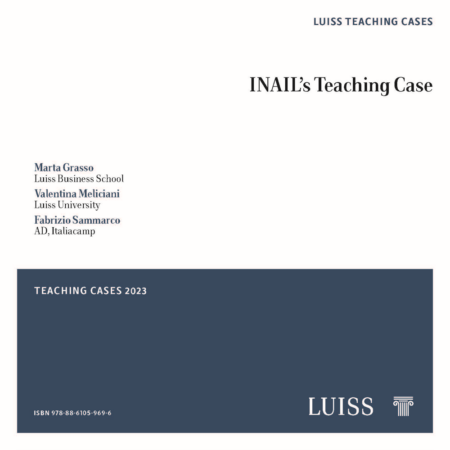
Authors: Marta Grasso, Valentina Meliciani, Fabrizio Sammarco
Abstract:
Interest in digital transformation, which in its broadest sense indicates a process of continuous evolution aimed at increasing the reproduction of world capital over time through technological innovation, initially spread among those companies searching for methods designed to better increase their ability to be resilient in future crises. This interest reached its peak during the pandemic period when Public Administrations had to promptly respond to emerging needs and ensure the continuity of services. The Covid-19 pandemic greatly accelerated the process of digitalization and of organizational transformation within companies and in the Italian public sphere. In this period INAIL underwent a profound transformation that was completed by the creation of the Digital Workplace and culminated in the adoption of the Single Digital Desk. As a lever for change, the Institute’s Central Management for Digital Organization (DCOD) has developed a new approach for the management of technologies and data, as well as a novel way of selecting and dealing with suppliers, and has defined a new strategy for supporting INAIL’s transformation from e-government to digital government. This process has required important changes in the Institute’s organizational model in order to harmonize remote work with social interaction and improve the community’s well-being. In line with the vision of an innovative public administration, open to change and sensitive to the issue of organizational well-being, the Institute has transformed the way its employees work through high-level technological solutions and collaboration platforms.This didactic case uses INAIL’s experience to highlight the relationship between various technological trends, the evolution of organizational models and their social consequences.
Download Case Study
Request Teaching Notes