News
News
News
News

08 January 2016

MBA Social Impact, a challenge to create a change.

The business world today has an undeniable social impact, that generates both risks and opportunities for companies. Finding business solutions that could foster shared values is a challenge for the new generation of managers whose responsibility goes beyond the economic activity to reach a social perspective. The main challenges that future managers will tackle are resilience and responsibilities, their goal is to make wealth into shared values. Together with no profit organizations and social enterprises, the Full-time MBA and Part-time MBA provide the Social Impact course: a series of activities, competitions, and exposure to real cases and contexts where students will face challenges to be solved using their creativity, and the skills acquired during the master. The Social Impact course is intended to provide students with cultural knowledge and social awareness that contributes to making  a bright, significant and sustainable change for society, mostly those who live difficult situations in different aspects. Through the collaboration of social entrepreneurs and NGOs, students will be involved  in competitions to develop knowledge, skills, and attitudes to engage, lead, and innovate in a global context, with advanced understanding of social issues key and the ability to create change. The aim of this course is to raise awareness among students about the two-fold role they play in society: by combining creativity and good will, students can generate both economic and social value. In the next days, the MBA students will face the first challenge in collaboration with Energia per i Diritti Umani (Energy for the Human Rights Association), a blind competition aiming at having a clear social impact. The results of the challenges will be directly applied to the real context by the organization involved. Results will be reported to the MBA students later in the year. The learning objectives of the challenges are forging the MBA students’ capability to take decisions in teams and under pressure, and making them experience the feeling that a future manager’s actions can be –and should be- linked to the most important social issues faced by our societies. Watch the gallery     8 January 2016

22 December 2015

Project Risk Management: a cultural approach

(By Paolo Cecchini, PMP, PMI-RMP, PMO Leader, Project Management Specialist, Risk Manager) 24/11/2015 Business Continuity & Crisis Management "Find your project's risks before they find you" Introduction Waking up and preparing your coffee this morning you took a risk. Going at work by car, by bike or on foot you took a risk. If you decided to put your money on a bank account or use it to invest in stocks you took a risk. If you decided to spend your weekend gambling, you took a risk. Risk is always present in every activity, especially when decision is required. Embracing the correct risk management strategy is definitely useful in everyday life, but becomes fundamental in project management where, to guarantee project success, it is necessary to implement a transition from reactive risk management to proactive, predictive risk management. History Risk as such is very well known since ancient times, but its structured management started after the big changes in numbering systems, the understanding of statistical principles behind probability and the increase in popularity of gambling and betting. But it was only during the Renaissance that a "scientific" management of statistical concepts applied to gambling started to appear. Although the Arabic numbering system, featuring digits worldwide used nowadays, has been introduced in Europe in between 1000 and 1200 A.C., making possible calculations beyond simple sums and subtractions, we had to wait the Renaissance for the digits 0-9 to completely replace the roman numerals. Actually the first probabilistic study on gambling (cards, dices, betting) dates back to Renaissance, from Girolamo Cardano, an italian mathematician, philosopher and doctor. A well-structured analysis of risk management started after the second world war, evolving towards the current structure after 1955 and improving from 1970 up to now both in financial and operational environment. A risk management culture The foundation of an effective risk management is the existence in the organization (all levels) of the related culture. The message spread by this culture is that risk management is part of everyday life for all the members of the organization. In other words the goal of the risk culture is to create a well-defined environment where both managers and professionals are always looking for risks and related responses in order to use previous experience for effective decision making. There are several obstacles moving against risk culture creation, first of all the risk management costs. Among them: very short timeframes; lack of confidence in risk management processes; fear of negative interpretation of risk identification process. Almost always the common root cause of the issues listed above is the lack of understanding, by top level management, of the benefits that an effective risk management policy could bring to the company. This is also the reason why it is difficult to get well dimensioned resources for risk management; in case of limited resources availability risk management activities are the first to be canceled (almost always). It is then vital for the project manager or the risk manager the creation of a project environment where all the main stakeholders are completely aware of the importance and effectiveness of proper risk management. There are several actions that can be implemented to reach this goal. Among them: get consensus and support from top level management; enroll an expert risk management professional; provide specific risk management education; put in place a well performing risk management communication policy; use the right risk management tools; create a risk management knowledge base and use it for future projects. Risk definition and description From the project point of view the most common definition of risk is the one adopted by the Project Management Institute: "Project risk is an uncertain event or condition that, if it occurs, has a positive or negative effect on one or more project objectives such as scope, schedule, cost, or quality" It is important to underline the fact, almost always ignored at least in our Mediterranean culture, that with the word "risk" we can refer to positive (opportunities) or negative (threats) events. It is therefore important, during the risk identification phase, to identify both threats and opportunities and to handle them in the proper way. In a well structured risk management process, every identified risk is defined using a risk metalanguage including at least the following: cause event effect Beside the risk definition with the metalanguage, the two most important parameters to define a risk (positive or negative) are the probability of the event and the impact on one or more project objectives. As we'll see later on when talking about quantitative risk analysis, it is common habit to assign a symbolic value to the risk multiplying its probability by its impact. Risk Management process Effective risk management must be supported by a rigorous and well defined process. Main goal of risk management is to minimize threats probability and impact and to maximize opportunities probability and impact. The Project Management Institute defines for project risk management a structure composed by six separate processes: Plan Risk Management Identify Risks Perform Qualitative Risk Analysis Perform Quantitative Risk Analysis Plan Risk Responses Control Risks As a general guideline every process is characterized by a well defined list of input data (Inputs), a set of tools and techniques to process input data and a well defined list of output data (Outputs) composed by the results of process computation that can be Inputs to other risk management processes at the same time. The entire set of risk management processes is repeated during the whole project life cycle as performing activities to deliver project outcomes can generate new risks. Project risk originates from the uncertainty naturally included in all projects; two risk macro categories can be defined: known risks: the ones that have been previously identified, analyzed and provided with response actions in order to mitigate their probability and impact (or to enhance them in the case of opportunities); unknown risks: the ones that can't be identified (unpredictable) and therefore can't be proactively managed but you can only react if and when they occur. It is also worthwhile to define a few concepts that enhance risk definition and characterization inside organizations and among stakeholders: risk attitude: the level of risk that organizations or stakeholders are willing to accept and how they approach it; risk appetite: degree of uncertainty an entity is willing to take on in anticipation of a reward (PMBoK 5th Edition); risk tolerance: the degree, amount or volume of risk that an organization or individual will withstand (PMBoK 5th Edition); risk threshold: measures along the level of uncertainty or the level of impact at which a stakeholder may have a specific interest. Below that risk threshold the organization will accept the risk, above that risk threshold the organization will not tolerate the risk (PMBoK 5th Edition). As already said before, effectiveness of risk management process is guaranteed only if the entire organization shows complete acknowledgment and acceptance for this activity. Plan Risk Management This process defines how risk management activities will be performed; it also ensures that resources involved in risk management are well balanced with relevance of the project for the organization. A well-defined and detailed planning of risk management activities will result in a huge increase of success probability. At the end of the process a Risk Management Plan document will be released. Identify Risks This process drives the identification of risks that could have an impact on one or more project objectives, depicting all risks characteristics. Tasks included in this process will supposedly allow the project team to know in advance events that could affect project objectives, making possible the implementation of a proactive management. The result of the process is the first draft of the risk register, a document containing all relevant information on identified risk that will be progressively updated with results from subsequent risk management processes. Perform Qualitative Risk Analysis This process, by mean of qualitative analysis of probability and impact of all identified risks, provides a prioritized list of them with the aim to reduce the project uncertainty level and to focus the team on high priority risks. Using qualitative analysis techniques mainly based on high level estimation of probability and impact (not numerical evaluation but with definitions like high-medium-low) the process provides as output an update of the risk register with new relevant information. Perform Quantitative Risk Analysis This process, by means of numerical and statistical techniques, allows the in depth evaluation of the overall project risk. Moreover it provides an important evaluation tool for decision makers. Tools and techniques used for this kind of analysis are quite complex and therefore expensive; that's the reason why even if obtained results allow predicting the future of the project (in terms of profitability) with a very high confidence factor, they are used only for high priority risks. Plan Risk Responses This process, using results from previous analysis, defines and plans a set of risk response actions aimed to decrease probability and/or impact of negative risks (threats) and to increase probability and/or impact of positive risks (opportunities). It is very important to clarify that despite the name "response actions", these actions are not performed when the risk happens, but before the risk can happen in order to modify risk probability and/or impact for the benefit of the project. Risk responses are defined according to the different risk response strategies: negative risks (threats): Avoid: avoidance is simply avoiding the risk; can be accomplished in many different ways and generally happens early in the project when any change will result in fewer impacts; Transfer: transference is a response strategy where risk and its ownership is transferred to a third party; the risk doesn’t disappear (it is just moved). Transference nearly always involves payment of a risk premium to the third party being in charge to handle the risk; Mitigate: Mitigation is a strategy aimed to reduce the probability and/or impact of an identified risk; mitigation is done before the risk happens, cost and time for mitigation has to be lower than cost and time involved repairing the damage caused by the risk. The risk may still happen but hopefully impact will be very low; Accept: Acceptance is a strategy that simply accepts the risk because no other action is feasible; passive acceptance requires no action, the project team deals with the risks as they happen. Active acceptance involves developing a contingency plan should the risk occur. positive risks (opportunities): Exploit: This strategy may be selected for opportunities where the organization wishes to ensure that the opportunity is realized; it tries to eliminate the uncertainty associated with the opportunity ensuring it will happen; Enhance: This strategy is used to increase the probability and/or positive impacts of an opportunity; it tries to identify and maximize key drivers of these impacts as this may increase the probability for the opportunity to happen; Share: this strategy involves allocating some ownership of the opportunity to a third party best able to pursue the opportunity itself; Accept: this strategy accepts the opportunity in order to gain advantage from it but without actively pursuing it. Control Risks This process takes care of previously defined response plans implementation, identified risks tracking and monitoring, residual and secondary risks monitoring, new risks identification and risk management efficiency evaluation. This process also ensures that the risk management process is performed iteratively during the entire project life cycle. Project Risk Management in Ericsson Project management culture is so strongly embedded in our company that we have defined our own project management methodology (hugely based on Project Management Institute guidelines), globally adopted. As a consequence the project risk management has a very high relevance in our business process, also due to the fact that all our solutions are delivered as projects and therefore their success is fundamental for company health. Inside our project management methodology the risk management process has a very high priority, so high that specific actions have been put in place to optimize and enhance it. Actions span from dedicated training to existing process audit to existing tools verification to new tools adoption analysis. Great emphasis is put on risk management process introduction since the very early stages of offer negotiation with the customer, with the aim to increase risk identification effectiveness and enhance response plan development in order to get better project results, with benefits for the customer and the provider as well. Conclusions What has been described above is just a scratch on the surface of a complex and fascinating discipline highly relevant for any kind of task. In the needs of shortness I haven't analyzed for instance stakeholder communication issues that dealing with risks have very high priority and are quite complex. I hope this short introduction triggered your interest for this discipline and conveyed the message that we have access to more sophisticated tools to increase predictability than the crystal ball. Business Continuity & Crisis Management

21 December 2015

“Delta ti – In real time”, the exhibition organised by the students of LUISS Master of Art.

The students of the fifth edition of the LUISS Master of Art, under the guidance of Achille Bonito Oliva, presented, as a curatorial collective, the exhibit “Delta ti – In tempo reale” (Delta ti -  In real time), at the Carlo Bilotti Museum. The choice of the title, Delta ti, derives from the physics formula that expresses the concept of time laps and means to synthesize the contemporary condition in which reality rapidly chances and everything is concentrated in a single moment, a suspended moment, in real time. A path punctuated by the 18 art works of contemporary artists coming from different backgrounds, generations and poetics: sculpture, photography, video, fixtures, performances and audio interventions shape the aesthetic research and critic between art and life. The artists that took part to the exhibit, with their works or performances, are: Elisabetta Benassi, Mircea Cantor , Gianni Politi, Claire Fontaine, Giorgio Andreotta Calò, Fabio Mauri, Emiliano Maggi, HH Lim, Cesare Pietroiusti, Rà Di Martino, Franco Vaccari, Matteo Nasini, Ileana Florescu , Leonardo Petrucci, Andrea Lanini, Baldo Diodato, Piero Golia , Pablo Mesa Capella. The exhibit will be open to the public from December 17, 2015 to January 17, 2016. Contacts: progettomostra@luiss.it lma@luiss.it Info Exhibition: Carlo Bilotti Museum – Aranciera di Villa Borghese Viale Fiorello La Guardia, 00197 - Rome (Italy) Tel. (+39) 060608 Free entrance Orari: Tuesday – Friday 10.00 – 16.00; Saturday and Sunday 10.00 – 19.00; 24 e 31 December  10.00 – 14.00; 25 December, 31 January. Closed on Monday.

14 December 2015

Closed the First Successfull Edition of the Course on how to Improve and Explout the Sport Facilities - LUISS Business School and CONI

On the last November, 23, 24 and 25 the first edition of the Course "Stadiums and sports facilities: the new frontiers of real estate" hold by LUISS Business School together with CONI. The attenders were all the stakeholders involved: football clubs, sport associations, real estate asset management companies, investment companies, law firms, entrepreneurs and professionals. The sports sector suffers a gap due to the lack of facilities compliant with security and sustainability. The law 147/2013 tries to enhance the sports facilities with economic sustainability. In this changing scenario, the Course was the opportunity to learn new skills and to discuss the most relevant issues. In considerazione del grande successo dell’iniziativa e dell’alto livello delle competenze coinvolte, LUISS Business School e CONI sono già al lavoro per realizzare la nuova edizione in programma nel 2016. L’obiettivo degli organizzatori è che questa iniziativa possa divenire il punto di riferimento per tutti coloro che intendano approcciare con competenza e professionalità questo importante e sempre più rilevante opportunità di business. Becasue of the successs, LUISS Business School and CONI have already started to work at the second edition to be scheduled in 2016. The mission is to become a benchmark for all those who wish to approach with competence and professionalism this important business opportunities.

14 December 2015

The compliance: reflections to go beyond appearance

Alessandro Addotti - MACOM LUISS Business School Co-Director - Partner at Law Firm Addotti&Associates The definition of compliance requires a systematic approach with regard to the organizational way. Compliance must be pervasive in every business environment. The “worst case scenario” as source of costs of not-compliance can be a useful guideline about the advantages of compliance. Compliance consists of rules and applicable laws. However, the definition limits the full organizational commitment which is what compliance means. It isn’t necessary to tick the box in order to define compliance, since it should be a part of the mission and the values of a company, and a potential source of competitive advantage, not simply a budget item. The previous inputs define the arena where compliance operates: in particular, in the Italian legislation, L. 231, AML, corporate governance (mainly in regulated sectors) and safety in the workplace are all rules related to compliance. Compliance also means tax or antitrust issues, as well as the standard of business conduct. Last but not least, the ownership of compliance: it is not enough for a job profile to assure a real best practice in compliance. It should be concrete, operational and measurable. An organizational chart or a system of delegated powers are good practices, but they are not enough. Compliance efforts should aim at integrated compliance (the role of EHS Officer vs Compliance Officer or the relationship between Legal and Compliance) with KPIs in order to measure its performance. With this regard, the relationship between compliance and internal audit is essential: a culture of compliance requires the awareness and the knowledge of the main topics and issues above mentioned. Finally, with regard to the cost of compliance, the most relevant benchmark could be the cost of the not-applied compliance. Although the advantages of compliance are hard to measure, the failure to comply would easily be measured in legal terms.

14 December 2015

Challenges and needs of tourism industry, experts meet in the Corporate Advisory Board at LUISS Business School

Soft skills, field experience, attention to the territory and human capital are some of the key elements of the Corporate Advisory Board (CAB) of the Master in Tourism Management. LUISS Business School began this process through the involvement of institutions, large corporations, and other stakeholders in the tourism industry to discuss the training programs and rendering them more effective. During the meeting, the debate produced new ideas and new expectations with specific regard to challenges, needs and opportunities in the tourism sector: the need to strengthen soft skills and behavioral attitudes, through lab experience; customer focus, in order to assure a unique touristic experience in line with needs and expectations; the importance of enhancing the territory, the culture, the experience; attention to human capital and operations, where there is direct interaction with employees and customers. The role of CAB aims to establish a strong link between training and the work market. The step forward will be a close co-operation among companies, institutions and other stakeholders, and the Master’s Director, in order to launch experiential seminars aimed to strengthen the technical skills and to allow students to work on their Field Project. Prof. Matteo Caroli, the Master’s Director, with the aim of strengthening the cooperation with corporate partners, announced the launch of a specific Competence Centre in Tourism Industry, in order to focus on applied research for the touristic companies.

11 December 2015

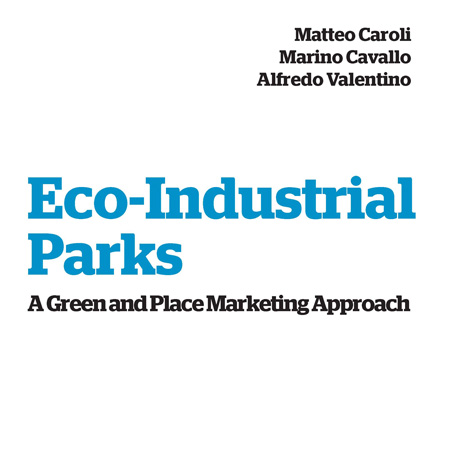
E-Book: Eco-Industrial Parks. A Green and Place Marketing Approach

“Eco-Industrial Parks – A Green and Place Marketing Approach” is a project, which has been co-financed by the European Regional Development Fund. The author of the e-book is Matteo Caroli, Full Professor of International Business at LUISS University and Head of the Knowledge Centre at LUISS Business School, who worked with Marino Cavallo and Alfredo Valentino. During the last few years the transition from a non-sustainable to a sustainable world is becoming the main goal for scholars and practitioners. The extant study shows the centrality of “industry-environment” interactions in this process. Especially, following the idea of natural cycles, industrial ecologists are redefining the industrial facilities and infrastructures to optimize waste management and to reduce global pollution. In this context the most powerful tool is the Eco-Industrial Park. The latter is oriented towards a twisting of classical industrial estate and the establishment of a “system” which consists of business activities, natural sources, energy, raw materials, waste, final products, and labour. According to Lowe and Evans (1995), “the members of eco-industrial park seek enhanced environmental, economic and social performance through collaboration in managing environmental and resource issues”. This book highlights the pivotal role played by eco-industrial parks in this transition process to implement an efficient and sustainable use of materials, energy, and waste. It addresses this interesting and current topic through a theoretical and practical perspective. It gives potentially important managerial implications to formulate marketing strategies to enhance Eco-industrial park’s and place’s attractiveness. Download the e-Book (all rights reserved)

23 November 2015

The new challenges of Procurement Management

(by Riccardo Bini | LUISS Business School) 23/11/2015 The achievement of quality and inexpensiveness in procurement, with particular regard to the investment expenses, imposes a thorough evaluation of the elements that influence the overall cost of a supply during its lifespan, including elements, that in the past have been underestimated, such as the effect on the environment and sustainability. The knowledge of the buying markets, the pricing trends, the competitive factors for adding value to a procurement process are all key factors for success. Budgeting no longer means simply accounting rules: it is evolving to best practices with a continuous monitoring. The new technological tools, such as ERP and e-procurement, that have rendered automatic the buying process, are now opening to new opportunities, such as a marketing-oriented procurement approach, vendor management, suppliers’ KPIs monitoring, even through open source solutions available on smart devices. All the above-mentioned features are very relevant in companies that have already faced a growth, diversification and internationalization process. The Procurement Office acts as a border element between demand and supply and has a key role in the strategic positioning through the negotiation power, the cost control, the increasing level of productivity and sales and quality improvement for the final customer. To this end, an organizational model based on expenditures policies, engineering of processes and activities, monitoring and continuous quality improvement is essential. The mission of the Procurement Office should leverage on all the management tools in order to seize the opportunities from the new competitive environment and the changing technologies. In particular, it should be aimed to: Flat organizational models, that are oriented to the analysis of the strategic processes in demand/supply and to strategies consistent with thr Business’ needs and its time to market, operations and claims (which are more and more outsourced). Design of new buying processes with an early involvement of the Procurement Office, in order to assure the technical set-up of the needs (aligned with the market standards) and of the budget. Minimize the procurement risk, through the strengthening of the suppliers’ portfolio control policies, from the simple quality compliance check to a relevant moment of check of the suppliers’ capabilities. Global oriented procurement, even through the acquisition of certifications, which comply with international training standards, in order to share policies, technical language and networks. Boost of procurement innovation, even through not-conventional policies, such as the cooperation with competitors in no core purchases (consortium buying), the procurement service and the suppliers portfolio as business target market. Opening to the digital revolution, with new technological solutions or the innovation of the existing ones, in order to get a forecast-oriented approach to demand and supply (big data), to launch and run real time “comakership” with suppliers, to monitor the vendor reputation, to develop new kinds of execution (3D printing or augmented reality).

09 November 2015

The launch of Project Organising Competence Centre

(By Andrea Prencipe, POCC Director and Associate Dean for International Development LUISS Business School) On November 4th LUISS Business School has formally launched the Project Organising Competence Centre (POCC) with the aim to promote research, build theory, and support improvements in project practices by forging a close collaboration with industrial partners in Italy and internationally. The POCC reflects a recent growth in research and teaching expertise in project studies within the LUISS Business School and the University at large. It is being established to address a variety of issues concerned with project-based organising in firms and projects, including innovation, learning, capability building, and strategy. The launch event has been well received: academics and project practitioners interacted and shared ideas and information on a variety of themes and topics. Dr. Mark Kozak-Holland delivered a very interesting lecture on impossible projects: using historical case studies, he drew implications and lessons to face current project management challenges. I have then chaired a round table discussion on Impossible Projects: Massimo Debenedetti (Fincantieri) highlighted the challenges for implementing innovation mind-set in a project-based organisation; Lill Von Bork (Ericsson) illustrated the synergistic contribution of tools and people for the delivery of impossible projects. The second round table discussion was centred on the Milan Expo 2015 – literally, an impossible project made possible: Marco Rettighieri (Italfer), Alberto Prina (Telecome Italia), Alessandro Francolini (Ericsson) remarked the importance of effective project management, team work, and effort and commitment of individuals. I should think that the November 4th launch event signed a good start in terms of topic and approach: POCC’s faculty is convinced that by linking industry and academia to co-create new knowledge generate the basis to advance the knowledge frontier in project studies to inform project practices and approaches. POCC and PMI will host the 4th International MegaProjects Workshop on 19-20 May 2016 at LUISS Business School.     9/11/2015

No articles found