
News
News
News
News

22 September 2015

Board Practice: the strategic role of Corporate Governance in the Financial Institution

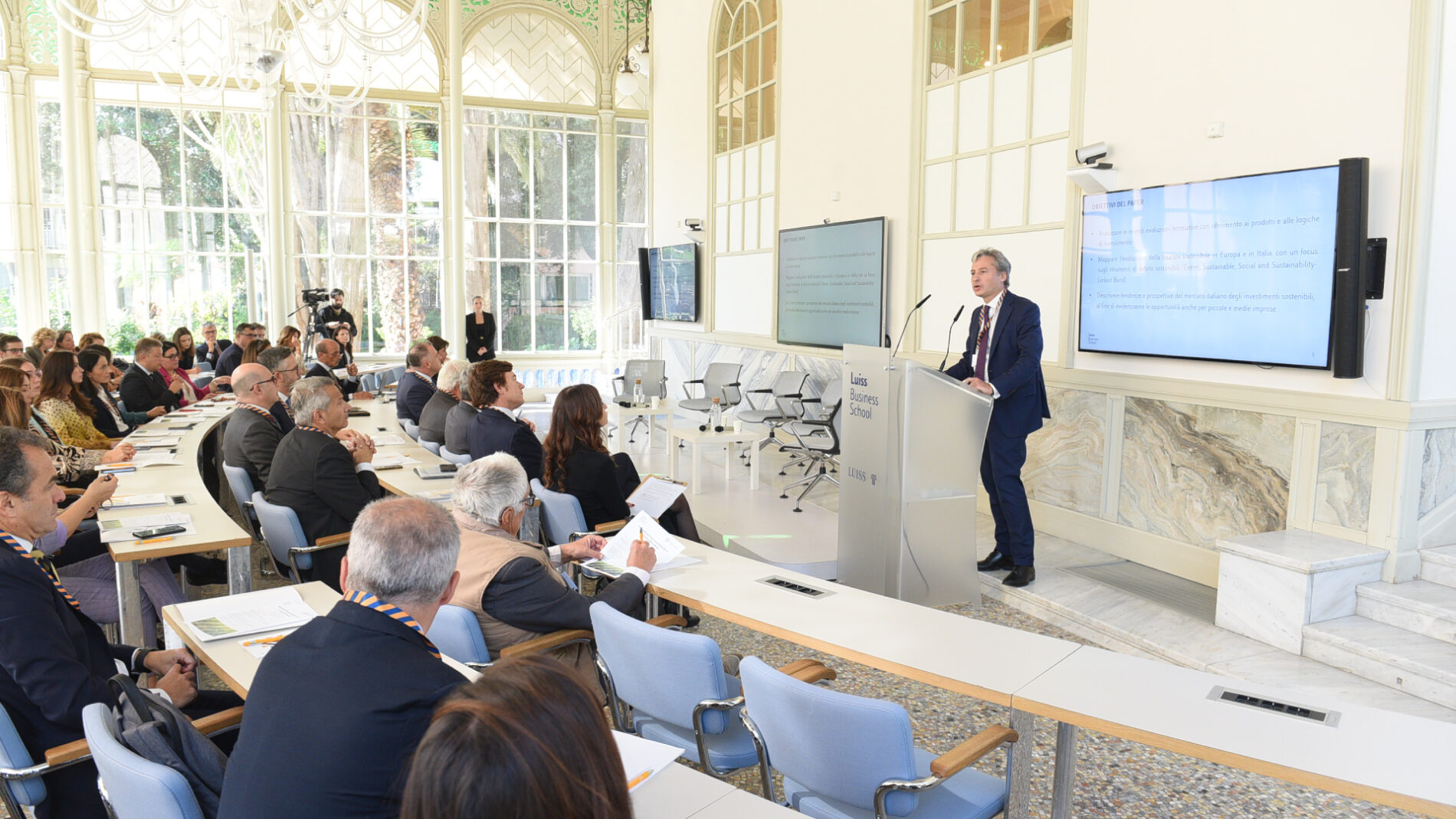
By Alessandro Zattoni, Associate Dean for Executive Education and life-long learning, LUISS BS (September 22, 2015) The Board is the most important corporate governance organisation because of its three crucial roles. The Board has to play a strategic role by addressing and contributing to the formulation of the strategic decision-making process. The Board must assure shareholders’ interests and, in a wider vision, it should balance the interests among all stakeholders. Finally, the Board should assure the relationship between the company and the surrounding environment. Despite that the effective execution of these three roles has a great impact on business performance, the legislator has traditionally given general and relatively vague directions regarding the type of tasks given to the Board, and has also failed in giving precise directions on its composition, structure and mode of operation. On the other hand, academics and consultants have long ignored this topic, without developing operation practices aimed to assure an efficient and effective performance of the Board. This lack of attention to the roles and characteristics of the Board, together with the surfacing of irresponsible, if not illegal, behaviors of the top management, has generated over the past few decades numerous legislative changes, thus promoting the introduction (and further revisions) of an Ethics Code. These new rules have positively influenced the Board characteristics. Specifically, they have defined with greater detail the duties of the Board and have given indications prompted to the definition of an ideal Board (in terms of number of directors, the mix between executive, not-executive and independent directors, demographic and professional profiles) and the organization of the tasks within the board (suggesting the separation of Chairman and CEO, the introduction of advisory committees and the introduction of an independent director). At the same time, the Bank of Italy has paid increasing attention to the issue of corporate governance in banks, of brokers and insurance companies starting from the 2008 Supervisory Rules in corporate governance of banks. At the end of a long process of recommendations, interventions and public consultations, the Bank of Italy has recently updated the Supervisory Rules on May 6, 2014. The document deals with the corporate governance in banks and provides specific guidelines to some critical issues such as: the optimal or maximal size of the Board, the level and diversification of the directors’ skills, the presence of an adequate number of independent and non-executive directors and the mandatory introduction of committees for larger dimension banks. It is therefore understood that the new legal deal has fostered, and at times imposed, a positive evolution of the characteristics of the boards. However, the codes and laws have paid more attention to the composition and the organization of Boards, rather than to the behavioral and procedure variables. Recent studies have shown, on the contrary, that the efficacy of the Board is significantly influenced by variables such as, for example, an open and critical debate, the commitment of the Board members to carrying out their tasks and the coordination of the contributions given to the Board activities. These studies therefore put in evidence that the Board design involves composition, organization and also procedural and behavioral aspects. To better all the above mentioned aspects, some researchers and Ethics Codes suggest the introduction of transparent assessment processes for the entire Board and the organization of training sessions on best practices in order to support the growing responsibilities of the Board. The effective implementation of these tools can significantly improve the performance of the individual directors and of the entire Board.

09 September 2015

The first LUISS Business School Team Building Day: an outdoor experience where enthusiasm , collaboration and trust meet to create a common vision.

“We do not need magic to change the world, we carry all the power we need inside ourselves already: we have the power to imagine better” (J.K. Rowling) On September 4th took place the first full day event dedicated to different team building activities at the Resort "Alla Corte delle Terme” in Viterbo, the LUISS BS Staff was divided into teams to put their teamwork skills into practice where trust, listening and mediation skills were tested. The team building did not only highlight competition but also the ability of the teams to work together, stressing the importance of collaboration to reach common goals and effectively divide the tasks between the different team members. The team building event represented an excellent opportunity to deepen relationships with colleagues also after the activities. The event highlighted a message: the importance of each individual, an essential element of a business school, and the real engine for change. Change is a core element in the LUISS BS vision while the School is fully committed to promote innovation. .embed-container { position: relative; padding-bottom: 56.25%; padding-top: 30px; height: 0; overflow: hidden; max-width: 100%; height: auto; } .embed-container iframe, .embed-container object, .embed-container embed { position: absolute; top: 0; left: 0; width: 100%; height: 100%; } Watch the pics

03 August 2015

Forum – Digital Health - The digital for a fair, sustainable and universal health

Rome, 10th – 11st – 12nd September 2015 LUISS Guido Carli, Viale Romania, 32   For Health, The digital can be a real revolution to health. "S@lute, the Forum of digital health" is the event that tells the ongoing transition. To the aim, there will be 3 days of debates and case histories involving 120 discussants. 10th September. The opening day with three different forums in order to build a general overview through the track of technological scenarios and the best practices on how to rule the innovation. We will talk about successful case histories even thanks to Luiss. 11st September. Work tables, live discussions and demo to live real and concrete change. The working groups will be dedicated to three main features: the drug, new healthcare models, patient empowerment. The digital processes will deeply affect the healthcare model with a re-design of the traditional places of care where people will benefit new rights and duties, that is why we talk about patient empowerment. But the relationship with drug - and with pharmacy and pharmacists – will change. Because the digital health is for everyone. 12nd September. The day will be dedicated to start up. “All you can IT” is about 10 Italian start ups which tell their ideas on how to improve the health model to potential investors. An important roundtable on the overall sector. Because the successful digital revolution in Health depends on research and innovation. More info

03 August 2015

The Lean Thinking in the Services Industry

The actual economic scenario is a challenge the companies have to face on: on the one hand, offering performance, quality and timely services; on the other hand, budget constraints and streamline procedures. If the only action to crisis is to keep/recover competitive advantage, the solution is to re-think the business model at strategic and operational level and to assure innovation management approach. With this regard, it is well known the success of specific management models, such as the Lean Thinking, which allows excellent results in terms of quality, efficiency and productivity. Lean thinking is a management philosophy which is oriented to maximize the customer value and to minimize any kind of waste. Although derived from manufacturing, Lean Thinking principles have been successfully applied to the service industry in many utility companies (Healthcare, Banks, Tourism, Insurance, Public Services, etc.). Its application has proven how to keep high quality service level through simplification, cutting waste and related costs, the improvement the overall users’ experience. The application of Lean philosophy to services industry must be strictly linked to the main features of the industry itself: intangibility of services, production and consumption in the same time, are just some of the most relevant pillars to keep in mind. Lean Thinking is something more than a method for process improvement. It is a philosophy and a mindset aimed to cut waste along the value chain through the involvement of staff in the solutions. The Lean is focused on how the product and the services are able to create value to customers and on how it is possible to increase the value itself. That is why we can talk about philosophy, values and behaviors which are able to a renew the corporate culture. Alessandro Bacci Partner Telos Consulting Lean System programme Scientific Coordinator

31 July 2015

The Project Manager

The project management field known an increasing interest in recent years depending on few essential elements: dynamic and global competitive environment; mobile, flexible and responsive organisations; organisational models based on autonomy and leadership; results oriented models; scarcity of resources and time. The capability to manage these elements is a key factor to assure the success of the organisation and the project is a relevant tool to the aim. At the same time, the uniqueness of a project requires a specific management approach with continuous planning, implementation and control. The search for project management models has led the development of methods, tools and techniques that actually are the framework of project management. Project Management is based on some general pillars: assuring consistency between project objectives and products keeping the commercial value of the project; monitoring the project implementation throughout the life-cycle; highlighting potential critical issues and rescheduling; properly defining roles and responsibilities. The Project Management field has deeply evolved over time, in particular with regard to the increasing attention paid to a pre-planning activity (before the start-up phase), where to find information and economic analysis. The focus is on the definition of all the objectives related to the project, which must be linked to feasibility, sustainability and customer satisfaction. Among the other elements that affect the Project Management trend, we can also recognise: the attention to stakeholders, who must be involved in the main decisions and activities, in order to assure the continuous compliance of the project with its requirements. In the fifth edition of PMBOK the related area was introduced; the attention to the "lessons learned" process, with the aim to gain practices which can be a benefit for current and future projects. In ISO 21500 there is an additional process called 'Collect lessons learned'; the attention to consistency between strategic objectives and project objectives, and to the organizational level of the project (several models and standards focused on this aspect - OPM3, PgMP, PfMP, etc.) Another relevant trend is the separation of Project Management from technical issues together to the awareness that sectors such as health, education, transport, leisure and advanced service benefit of effectiveness and competitiveness coming from Project Management. With this regard, the contribution of ISO 21500 was essential in order to overcome differences among international standard. Maria Elena Nenni Master in Project Management Scientific Coordinator

30 July 2015

No sustainability? No innovability. An MBA student’s reflection from the Expo Milano 2015

We were rewarded with a trip to the Expo Milano 2015. As we took in the buzz and energy of the 110 hectare large exposition site and walked to meet our Accenture Strategy hosts, I felt as if we had stepped into a sci-fi movie. The Expo is a magnificent experience; it was fascinating to see how hundreds of exhibiting countries and companies managed to find a common ground around the same topic: food. Every step I took at the Expo, Accenture’s clever play on words – sustainability to innovability – lingered in my mind. This phrase might seem as an oxymoron but it holds deep and true meaning: there is no innovation without sustainability. Businesses cannot keep afloat and succeed if they do not innovate and at the same time, sustain their success. We share the same planet and limited natural resources and now more than ever ‘sustainability’ plays a key role in ensuring that what we have today can be enjoyed by future generations. We all need to find a way to keep blossoming, developing and – well, let’s be honest, we all want it – being successful without harming the environment. Sustainability is not something that only environmental researchers and tree-huggers should be worried about; it is a cornerstone of any smart business. Environmental accounting should go hand in hand with reporting on a company’s financial results. Accenture Strategy, a global firm that puts strategy at the heart of its operations, invited me and my part-time MBA colleagues to visit their ultra-modern Expo lounge and see sustainability through their eyes. There we met Aldo Pozzoli who – after treating us to refreshments – talked about his unique task of helping Accenture deliver customized sustainability strategies to clients around the world. Some of the issues that Aldo mentioned, for example, depleting natural resources and the immense toll that their transformation into finished goods takes on our planet and environment, were not new to me but what touched me the most was his explanation of a circular economy. He explained that in a circular economy growth is decoupled from the use of limited resources through disruptive technology and business models based on longevity, renewability, reuse, repair, upgrade, refurbishment, capacity sharing and dematerialization. I was surprised of how logical this sounded and shocked that I hadn’t heard about it before. This approach is essential for any sustainability goal to succeed; it leads to companies gaining a ‘circular advantage’ – driving both resource efficiency and customer value. Accenture’s presentation and warm welcome to the Expo inspired me to wear sustainability and ‘innovability’ on my sleeve, both as I continue my studies at LUISS and as I decide what my next professional objective is going to be. Marta Millere LUISS BS part-time MBA

28 July 2015

Barbara Del Neri, Southern Europe Corporate Marketing Director at Procter & Gamble, meets young graduates in LUISS BS

Barbara Del Neri, Southern Europe Corporate Marketing Director at Procter & Gamble meets young graduates in LUISS BS. New Appointment, on September 24th, 2015, with the Open Evening for the Specialised Master of LUISS Business School. At 5 pm, Barbara Del Neri will discuss the most relevant issues related to post-graduation. Barbara Del Neri will bring her managerial experience to young graduates and will give them ideas and suggestions about the importance of training, through her personal professional  and international career at the FMCG big corporation. The event will be moderated by Maria Cristina Origlia, Editorial Coordinator at L’ Impresa – 24 ORE Group and will be an open event. Young graduates will have the opportunity to ask questions. Afterwards, as usual, there are going to be set dedicated information areas where perspective students will have the chance to talk with Programmes Directors about  contents, curriculum, admissions policies and services. Procter & Gamble has one of the largest brands portfolio in the world including 24 that make  more than $ 1 bl per year. Among the main brands,Dash, Lenor, Pantene, Gillette, Oral B, Pampers and many others. The P&G products are used by almost 5 bl people in the world and every year the company invests about $ 2 billion in R&D even thorough  million consumers and shoppers worldwide. P&G operates in 70 countries worldwide and it is operating in Italy since 1956. More info

23 July 2015

From Sustainability To Innovability. My experience at EXPO 2015 with Accenture.

Recently, LUISS Business School and Accenture Strategy offered us, MBA part time programme students, the opportunity to visit the 2015 Expo in Milan and to take part in a seminar held by Accenture on the sustainability. It was an exceptional experience. The venue had a relevant role in making this experience unique. Moreover, my MBA classmates and I had the chance to spend quality time together, far from project works or exams preparation on a beautiful (and very hot) summer day, at the EXPO  and we really  appreciated. Finally yet importantly, we were guests within Accenture Strategy, a quite  remarkable landlord to be hosted by. Accenture Strategy kindly opened the doors of their prestigious lounge and took us through a very interesting journey on sustainability and innovation. Sustainability is often an abused word, but Accenture Strategy helped us understand and translate this sometimes-intangible concept into something very practical. They had rigorously showed how sustainability is strictly related to firms’ competitive advantage, and explained effectively  how sustainability is going to eventually be one of the strongest driver of innovation in business. The discussion was very engaging. Conducted by Accenture’s experts we had an overview on how major companies (for example Enel), as well as small firms, are redesigning their organizational structure in order to be more effective in managing the environmental impact of production and in order to meet investors’ requirements about risk mitigation. We were shown how new models of sharing among companies could provide expensive but strategic equipment to more firms of a business cluster, firms that individually could not afford them (for example 3D printers). Clearly not being able to access  such advance resources or accessing in delay may affect or even prevent the growth. We were guided through how top companies are transforming their processes with the aim of decoupling growth from resources usages. They explained how many different ways can make a business sustainable when switching from the old-fashioned linear growth model to the new concept of a circular economy models, where products are designed since the beginning to be sustainable (for instance choosing material on the basis of the potential reuse). Where industrial waste is turned into a resource, structures and equipment are refurbished and end-of-life products are disassembles and single components reused (e.g. Renault cars). As MBA students, we were not only given a deeply valuable tool to understand the fast changing world in front of us. We were also proved that sustainability is a key aspect to improve our business of today as well as something crucial we need to think about when preparing, training and developing ourselves to be future leaders of innovation. I think this is basically what inspired all of us. Pierluca Arietti LUISS BS part-time MBA

23 July 2015

Report of a Football Match. LUISS Business School Wins the 2015 MBA Football Cup

The MBA Cup is an international football tournament for Alumni of the European Business Schools, the initiative of some MBA LUISS students started in 2001; one of the player is the current team captain and professor of Real Estate at LUISS Business School, Alessandro Belli. In the beginning only the most important Italian Business Schools participated: LUISS, Bocconi, Politecnico di Milano, Bologna, CUOA Altavilla Vicentina,  however nowadays the championship is assuming a more international profile and maybe one day it could become the “Champions League” of the main European Business Schools. It did not take long before  Insead Fointanbleau, IESE Barcellona, Rotterdam SM, Athens, London University in participating in the tournament. This is a unique MBA event in its category in Europe, played in prestigious football stadiums such as Rome Flaminio’s Stadium and the Federal Centre of Coverciano, which is the location of the Italian National football team. The MBA Cup was thought as an important meeting for the MBA environment too, a great opportunity to create and strengthen network. Conferences about Team-building and sport-applied management have always been associated to this sport event, such as  the great MBA cup party in Florence during the tenth anniversary of the tournament. Moreover prestigious testimonials such as the “Golden Boy” Gianni Rivera, an Italian National team idol of the Seventies, and the International referee Pierluigi Collina have contributed in the past to set the event under the spotlight. The 2015 edition of the tournament took place in the month of June. Our LUISS BS couldn’t win the cup during the previous editions and this contributed as an additional encouragement for our athletes. The team started winning with a score of 1-0 against MIP and 2-0 against CUOA. The satisfaction arrived after winning against MIB,  which were defeated with a 4-0 score. The athletes had a positive feeling: Coach Belli’s players were ready, the team was solid and self-confident. The final match was on Sunday 21st  of June, Perugia Stadium is an classic stage of the great events, the opponent of “Bologna Business School” which has a well-trained team with a great attacking game style. The match is breath taking, with many opportunities from both sides, the LUISS BS team had to fight to maintain the score of 3-2 even though they were dominating the match, however Bologna tied last minute and set the score to  3-3. After thirty minutes of extra-time there was no winner, but in the toughest time the “LUISS Business School” spirit emerges, and they become extremely focused  and do not miss any penalty shot, despite BBS has already missed one. They arrived to the last penalty shot, the one that will determine the whole match; if the LUISS BS goalkeeper saves the last one the cup will return to Rome were everything has started. The Stadium is silent, everyone is focused on the field and the bleachers, the goalkeeper bended his legs, concentrated, he was aware of the enormous responsibility he had, however his teammate supported him. All of a sudden screaming fill the stadium, LUISS BS players run to celebrate their hero. It’s over! After many years the cup returns to Rome, LUISS BS is the new MBA champion! It’s an unbelievable celebration, all the players exult, the veterans and the young ones, everyone that has played and participated, they’ve never given-up. Even though some of the athletes were injured during the game, they never gave up and continued playing until the end. A great success, a beautiful experience which both winners and defeated will keep as a life memory. Special thanks to all players and to LUISS BS and Assomaster who have always supported with enthusiasm of the organization and the participation of the team. We will see you in 2016!

23 July 2015

Entrepreneurship and international mindset: Campari Group introduces itself to MBA students

"Big enough to win, small enough to act quickly and decisively": this is the mission of a company that has marked Italian history and that now wants to mark the global one; this is the self-awareness of a successful industry that humbly recognizes the importance to make always better and faster; this is the example of an entrepreneurial culture that Luca Garavoglia, Chairman of the Campari Group, showed to the MBA classroom in July 13th,2015. The presentation touched two very important topics for our students, entrepreneurship and internationality , defined as key factors for success. The first topic refers as “Everyone can become a CEO” approach, as mentioned by Mr. Garavoglia, or rather the aptitude to predict and make things happen, to be proactive, the ability to establish an objective and the determination to reach it, the ability to choose collaborators and to know how to appreciate people. The second topic refers to the way to make that approach into practice, which is being open-minded, both in new ideas and multiculturalism. Nowadays, it is impossible to think locally and individually if you want to "conquer" the economic world market. According to the Career Service, which tends to instill the value of being entrepreneurs of themselves, the meeting with Mr. Garavoglia was extremely interesting. The students were able to see the positive return that can create entrepreneurship and internationality. They had an example of an industrial reality born locally and that today is ranking among the major players in the global beverage sector; it began as a single-brand company that now boasts a portfolio of more than 50 brands and a presence in 190 countries with leading positions in Europe and America. These results are thanks to the approach and people. “People are the main factor for success” (Luca Garavoglia)

No articles found