
News
News
News
News

20 October 2015

The Part-time MBA focuses on Industries

(By Massimiliana Sensi, Part-time MBA Career Service, LUISS Business School) As a Part Time MBA  participant you will  join a class of  MBA students selected to exploit  diversity in terms of age, gender, nationality, experience,  education and professional background. LUISS Business School  aims  to bring out the best in each participant, so that you learn from each other’s experiences as well as from their own cutting-edge research. Our objective is to tease out different perspectives in order to orchestrate a multi-faceted debate and challenge everyone’s assumptions. In this perspective, one of the main objectives the MBA programme seeks  is to encourage and develop the knowledge of industries other than those where students are currently operating. That is why we developed,  as part of the MBA path,  an innovative programme of study focused on some particularly relevant industries such as Pharmaceutical, Fast Moving Consumer Goods and Luxury. This programme  format has been designed and finalised  to maximise the  effectiveness of your learning experience through: a workshop held in court by an officer of high seniority in terms of experience and knowledge of the industry with opportunities for discussion and case histories a panel discussion among selected leaders from the business world of industry moderated by a chairman of great profile and prestige will address topics and very innovative contents. A unique opportunity of growth will be offered to the students who can interact directly with the members of this round table This  allows a proper and thorough knowledge of the main mechanisms and dynamics of other market industries. The Programme 20 October 2015

16 October 2015

Internet of Everything: new opportunities in an always more connected world.

November 17, Rome, Cisco IoE talks Less than 1% of the world is de facto connected[1]. It is difficult to imagine the potentialities that will rise as more and more devices and people gain access to the web.  Potentialities that are anyhow becoming concrete with positive consequences that impact on the whole society.  Sustainability, competitiveness, innovation are the key words which can represent IoE, Internet of Everything, the world able to connect people, objects, processes, data flows in quite different ways.[2]. The opportunities created by the increasing digital trend require a careful analysis and planning in order to optimize the benefits of IoE. A large number of individuals and organizations can exploit benefits and advantages. In particular, the Public Administration and government organizations can reduce the costs and increase revenues through the improvement of the productivity and, therefore, of the quality of life. Examples of this kind of administration are Hamburg and Barcelona.[3] Following the edition in Roncale (TV), on November 17, from 9:30 am to 2 pm, the Cisco IoE talks will take place in Rome at the amazing “Auditorium Parco della Musica” with the sponsorship of LUISS Business School. The debate will focus on how IoT can transform the Country and improve the quality of life. The analysis of the Public Administration will be of central importance: a real change must also happen in the relationship between people and institutions. The digitalization and the technological innovation are strategic resources for the country[4]. Find the programme The meeting is divided in three sections: digitalians and innovation; digitalians and country; digitalians and institutions. The program is engaging and intense, as demonstrated by the last edition that  ranked between the 10th and the 5th position, in the trend topics, on Twitter for five consecutive hours. That shows the relevance of the topic in the International and National agenda. To register to the event, click on the following link [1] Cfr. http://www.cisco.com/web/IT/tomorrow-starts-here/ioe/index.html [2] Cfr. http://www.connectedfuturesmag.com/a/F14A5/government-organizations-are-transforming-experiences-with-ioe/?COUNTRY_SITE=it&CAMPAIGN=fy15_q3_ioe&POSITION=banner&CREATIVE=cf_it_banner&REFERRING_SITE=ioe_it [3] Ibidem [4] Cfr. http://ioetalks.it/agenda.

14 October 2015

EQUIS Results Announced

LUISS Business School, including the Department of Business and Management, enters the elite of education having achieved the prestigious international certification EQUIS, which acknowledges a limited number of Business Schools representing the 1% of managerial education. This accomplishment grants LUISS Business School and the Department of Business and Management the means to access the main rankings for education, thus acknowledging it with the quality standard that only 150 Schools, out of 15 thousand, have achieved. A one of a kind result. It is the first time that a School in Italy manages to validate all of its management programmes, from the Bachelor Degree – already amply distinguished for its elevated selection standards- to the Master in Business Administration, together with the master degrees, the PHDs, the specialised masters etc. An Italian pole of excellence that ascends the international scene thanks to its ability to face challenges even in the most difficult situations. “A long term goal, favoured and strongly desired by all our stakeholders” underlines prof. Paolo Boccardelli, Dean of the School. “The path has been long and not without obstacles, which were overcome with great stubbornness on every level”. The capability of being a team, the perseverance, the sense of duty and the care for students are the elements that have guided the beacon of validation, a result which gives credit to the whole staff that in the last months has had to face comparison with major European and extra European organizations. Work has been done on every level, from the renewal of the programme portfolio to new didactic methodologies, implementing the already prestigious faculty and services, the employability of programmes and researches, which is the result of a strong pool of integrated academics and practitioners. LUISS Business School offers comprehensive formation, that focuses on the classical aspects of knowledge and follows the student through volunteerism projects, theme laboratories and a career service that aims to foster talent and entrepreneurial attitude. Moving to Villa Blanc will serve as final incentive for this School.

08 October 2015

The Project Manager. Who is he, what does he do and why companies require him.

(by Maria Elena Nenni, Director of the Master in Project Management | LUISS Business School) 8 October 2015 The interest surrounding the Project Manager figure is still high: after years of increasing popularity, the new UNI regulation on the role of the Project Manager caused further interest in the job thanks to the introduction of a Professional Association of Project Managers, as established by law 04/2013. This not only gives new value to this profession by qualifying it in the Italian legal framework, but it also broadens the job opportunities, especially for junior profiles who are interested in discovering what the role of a Project Manager (PM) is. Before discussing the role and the figure of the PM we have to clarify the concept of project. A project is not, as traditionally believed, the tout-court creation of a complex good (a ship, a building, a bridge, etc.). It is rather something aimed to achieve one or several objectives with related specific benefits. Moreover, the project is not a delivery date, or a range of activities and tasks. The project becomes the satisfaction of an internal or external customer,  that will be given the chance to correctly and fully enjoy the use of a well realised service or good, enjoying all the deriving benefits. This broad vision of the concept of project implies the extension of its fields of application: a research program, the development of systems and technologies, the reorganization of internal processes are just some examples of projects in several sectors. In this context, the PM is responsible for the operational management of the project, but his job is not limited to a mere "technical supervision". The PM has to globally supervise the process which will assure the success of the project in terms of objectives and benefits. Consequently, the importance attributed to the management skills of the PM is ever growing, as he is responsible for the products’ quality, for the economic results, for the risks related to the project, for the coordination of all stakeholders, for the management of tangible and intangible assets and of human resources with very different skills and backgrounds (customers, suppliers, etc.). Aside from the technical and managerial skills, other relevant strong features a PM has to possess are: relational, communication and negotiation skills that will allow him to successfully engage with key stakeholders, make top managers appreciate the project, negotiate with suppliers, communicate with the customers. Who can become a PM? In this new framework, where there is a balance among technical skills, managerial skills and relationship skills, everybody has a chance of mastering this job, without significant preclusions given by educational background. The type of degree or the previous work experiences a person holds will probably just affect the industry and the kind of project the PM will work on. It would be difficult to imagine a civil engineer as PM in a pharmaceutical industry or a lawyer as PM at Finmeccanica. Anyhow, both can acquire or improve skills and methodology, to be spent in the sector where they are more confident in terms of technical background.

07 October 2015

Leadership for Growth. LUISS Business School trains future leaders

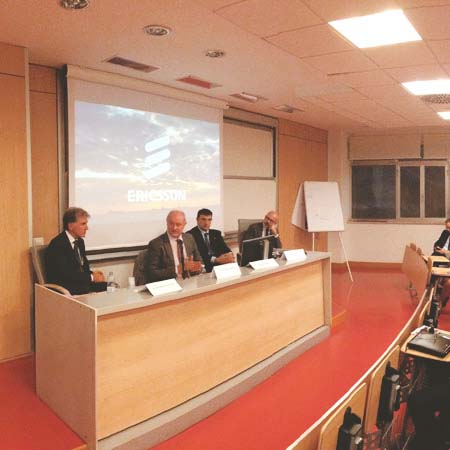
On 1 October 2015, eleven top executives, from significant national and international corporations, met LUISS Business School students, with the hope of conveying  the passion, the vision and the values necessary to build a strong leadership capable of motivating, exciting and leading the team beyond the simple economic performance. Luigi Abete, Aurelio Regina, Nunzio Mirtillo, Maximo Ibarra and Marco Patuano with Giampiero Massolo, Sami Kahale, Pietro Salini, Luigi De Vecchi, Catia Tomasetti, Biagio De Marchis and Gianluigi Cimmino introduced themselves, their experiences and lives divided between business and values. They talked about Transformational Leadership, the social impact of business choices, the importance of creativity, vision, global mind-set and the ability to inspire. No longer wolves of Wall Street, but people who are able to govern complexity with humility, enthusiasm and determination. To the question “who will be a  future leader” nobody gave an answer. Aurelio Regina talked about ethics as a key element. Ibarra and Mirtillo about change and sustainability. Massolo about networking as one of the factors necessary for the  Country's development. According to Patuano, leadership is a function of vision for elevated execution with high values. If the vision is zero and the execution 100, and vice versa, the product will be zero. On the other hand, the company's strategic vision multiplied by the work method and technical preparation give a result which is bigger than the simple sum of parts and which, if supported by values, is potentially able to exceed any expectation. Matter-of-fact, the case history of Pietro Salini exceeded all expectations: starting from a dream, together with Impregilo, he created one of the leading international construction and engineering companies. Ambassador Massolo talked about an ethics-driven growth and the opportunity of a transparent public-private relationship in order to support the Italian system. The Director of the Information Department touched issues such as responsibility of the leaders, highlighting the difference between doing something and being somebody. Catia Tomasetti, President at Acea, talked about the leader as a person with the ability to innovate, to anticipate change and to provide a vision even when everything seems to call for stability. She devoted all her energy in supporting the transformation of her company in a digitalized multi-utility. This transformation involved the insertion of the ICT in all the service components and personnel to  support professional growth. On the job training is also pivotal at Procter & Gamble. Sami Kahale manages transformation as a process, which starts with the recruitment of talents and carries on with the evaluation of individual and group performances. According to him, there is no leader without followers. The debate also touched the issue of e-leadership with Nunzio Mirtillo, Ericsson, a company which is particularly active as far as challenges go. According to his opinion, the leader knows how to manage the complexities arising from technology and the fast changing environment, without forgetting the social impact of his choices. Ericsson has in fact committed each of its top-level managers to the examination of the 17 points which the United Nations task force for sustainable development has agreed to propose at the next General Council to integrate the Millennium objectives, in order to understand how the company can work at their realization. A great event, and a productive debate aimed to redefine and innovate training. Watch the video .embed-container { position: relative; padding-bottom: 56.25%; padding-top: 30px; height: 0; overflow: hidden; max-width: 100%; height: auto; } .embed-container iframe, .embed-container object, .embed-container embed { position: absolute; top: 0; left: 0; width: 100%; height: 100%; } Watch the photo 02/10/2015

05 October 2015

Network and business opportunities: Ninja Marketing at the MBA class

Networking has an essential role in business. It can, matter of fact , allow the identification and creation of new opportunities, as well as the enhancement of already existing ones. Innovative relationships and business models can, sure enough, be built thanks to an efficient networking activity which can also guarantee the employment of fewer financial resources (in comparison to more traditional activities) thanks to the emphasis on personal commitment. Logically, wider is the network, greater are the opportunities linked to it. Therefore, the creation of a large scale network calls categorically for the use of what is offered by the web, in general, and by social networks, in particular. The seminar "The Power of Networking" which will be held at LUISS Business School on October, 9, from 2 to 6 pm, in the Part-time MBA class, will allow students to explore these topics, by providing them with high-standing practical and theoretical skills, through the experiences related by exceptional speakers. Ninja Marketing, an Italian marketing blog, will participate at the seminar . Founded in 2004 by Alex Giordano and Mirko Pallera it is a melting pot for creative talents and communicators with the shared goal renewing corporate communication. Today, Ninja Marketing is the leading Italian national marketing blog visited daily by influencers, trend setters and early adopters[1]. During the seminar MBA students will have the chance to examine in depth, professionally, the fundamental themes related to networking and to better understand the advantages it brings, by learning contextually to optimize resources and build new relationships. Acquiring the skills and competences necessary to research for connections, both potential and already existing, on social networks is fundamental in this context. The seminar  is aimed to this purpose and also means to provide MBA students with the knowledge necessary to build, keep and use a network with business goals. It is an occasion to offer participants a further instrument to guarantee their success and competitiveness in the business world. [1] Cfr. www.ninjamarketing.it/chi-siamo/. September, 28th 2015.

05 October 2015

How do you build a successful career? The meeting with Barbara Del Neri, Head of Marketing South Europe at P & G

The job market is becoming more and more complex, companies  are constantly asking for highly specialised professionals. In the past, students could build their own careers step by step according to a  learning by doing logic. Today, students have the need and opportunity of making their own choices in terms of industry or professional role. Choosing to attend a master is almost an obvious choice for students who, although very young, have clear ideas about their professional goals. To understand how to achieve their professional goals, young graduates had the opportunity to meet Barbara Del Neri, Head of Marketing for Southern Europe at Procter and Gamble, at LUISS Business School on September 24, 2015. She graduated with honours from LUISS Guido Carli and was immediately called for an interview in marketing with P&G. In other words it was the chance of a lifetime, since working at P&G had been her dream since high school. But how did she attain the position she holds today? Crucial are her intense passion for the job, a learning by doing attitude and a leadership style that goes beyond simply giving orders. Del Neri states that "there is a great difference between imposing oneself and being followed. Leaders belong to the latter category: they listen, suggest, innovate to create the environment that drives innovation”. It is essential to make choices that involve sacrifices, investing on oneself is important when it comes to education, talent is not enough, you have to learn and have passion, a lot of passion. Talking about post-graduate education Barbara Del Neri  affirms the importance, in the present situation, of acquiring the necessary knowledge to operate in a specific field. But no matter if the field of choice is Finance, Marketing or Real Estate she underlines the need for young people to have a strong background in terms of soft skills, can-do attitude, ability to compete at a global level and flexibility of thought and action. The current scenario forces us to face new challenges and constant changes that only the ability to adapt and a global mentality can master. Finally, when a student points out how hard it is nowadays to choose one’s own career path, Barbara Del Neri suggests to continue pursuing their dreams despite having to accept some compromises: you have to love your job to get good results! Watch the video 29/09/2015

05 October 2015

Digital transformation: governance on living IT infrastructures

(by Paolo Spagnoletti, Scientific Director of EMIT Programme, LUISS Business School - Assistant Professor of Business and Management Department and Coordinator of CeRSI, LUISS Guido Carli University) 29/09/2015 IT infrastructures are dynamic systems whose growing complexity depends on the local, persistent, and limitless shaping of IT capabilities. This re-shaping  results from the emergence of diverse communities with new learning and technical opportunities (J. vom Brocke, Braccini, Sonnenberg, & Spagnoletti, 2014). Therefore an IT infrastructure follows a trend determined by its social context and can be considered as a living system. The living IT infrastructures concept refers both to organizations, where business processes are vertically integrated in a hierarchical organization, and to innovative organizations where business models exploit the digital platforms (Resca, Za, & Spagnoletti, 2013). As the relationship between IT and organizations evolves, the potential for new forms of organizing is continually created (Zammuto, Griffith, Majchrzak, Dougherty, & Faraj, 2007). On the one hand recent advancements in information infrastructures, platforms, and applications are blurring the boundaries between the physical and digital worlds by providing ubiquitous communication, sensing, and computing capabilities (Hanseth & Lyytinen, 2010; Yoo, Henfridsson, & Lyytinen, 2010). On the other hand individuals and organizations make use of IT as a resource for achieving their own goals in a given environment. This creates unparalleled opportunities for innovating current forms of organizing towards socially interactive, ethically sensitive, trustworthy, self-organized and resilient systems by connecting people and organizations. Nevertheless, IT also constrains practices and poses issues in terms of privacy, ownership, freedom of speech, responsibility, technological determinism, digital divide, cyber warfare, and other ethical issues. In this situation, the governance of living IT infrastructures requires to balance the application of standardized procedures with the capability to lead the digital transformation of the organization. In order to enact effective governance practices, Chief Information Officers (CIO) and their IT staff need to master cost management and compliance tools together with models and methods for Information Systems (IS) development and maintenance. However, if CIOs want to play a leading role in the digital transformation of their business environment, they must also adopt a corporate management view on IT governance by challenging the alignment paradigm and developing a critical understanding of the opportunities and threats of digital innovation. Recent works conducted by the Information Systems (IS) group at LUISS BS, have addressed emerging topics in the IT governance arena such as the design principles for the design of digital platforms supporting online communities (Spagnoletti, Resca, & Lee, 2015), the view of IS design as socio-technical  construction and hence as an emergent process for engagement and learning (Spagnoletti, Resca, & Sæbø, 2015), the incident-centered analysis of information security settings and the balance between prevention and response paradigms for managing information security (Baskerville, Spagnoletti, & Kim, 2014). These studies have a direct impact on the teaching programmes at LUISS and the Executive Programme in IT Management & Governance of LUISS BS is the ideal target for translating these theoretical concepts into practice. With the aim of making the EMIT Programme even more competitive at a national level, the VI edition has been designed both to preserve the key strengths that have determined the success of the previous editions and to better articulate the strategy and innovation module. The Programme is in fact recognized as a unique opportunity to acquire both specific competences on IT governance and horizontal competences.  The former include business process management, security management, service support and operation management. The latter  concern, for instance, project management, change management, and legal aspects. Participants are given the opportunity to obtain five certifications (COBIT 5, PMP, CBPA, ITIL, CISM) in two years. The revised module on “Strategy  and innovation” - together with a set of thematic workshops on technology trends (e.g. Social Media, Mobile, Analytics, Cloud, etc.) and IT governance issues (e.g. cybersecurity, agile sw development, etc.) - will enable the participants to perceive the challenges of digital transformation  and to consider their implications within the organizational contexts where they work . References Baskerville, R., Spagnoletti, P., & Kim, J. (2014). Incident-centered information security: Managing a strategic balance between prevention and response. Information & Management, 51(1), 138–151. doi:10.1016/j.im.2013.11.004 Hanseth, O., & Lyytinen, K. (2010). Design theory for dynamic complexity in information infrastructures: the case of building internet. Journal of Information Technology, 25(1), 1–19. Resca, A., Za, S., & Spagnoletti, P. (2013). Digital platforms as sources for organizational and strategic transformation: a case study of the Midblue project. Journal of Theoretical and Applied E-Commerce Research, 8(2), 71–84. Spagnoletti, P., Resca, A., & Lee, G. (2015). A Design Theory for Digital Platforms Supporting Online Communities: A Multiple Case Study. Journal of Information Technology. Spagnoletti, P., Resca, A., & Sæbø, Ø. (2015). Design for social media engagement: Insights from elderly care assistance. Journal of Strategic Information Systems, 24(2), 128–145. doi:10.1016/j.jsis.2015.04.002 Vom Brocke, J., Braccini, A. M., Sonnenberg, C., & Spagnoletti, P. (2014). Living IT infrastructures — An ontology-based approach to aligning IT infrastructure capacity and business needs. International Journal of Accounting Information Systems, 15(3), 246–274. doi:10.1016/j.accinf.2013.10.004 Yoo, Y., Henfridsson, O., & Lyytinen, K. (2010). The New Organizing Logic of Digital Innovation: An Agenda for Information Systems Research. Information Systems Research, 21(4), 724–735. Zammuto, R. F., Griffith, T. L., Majchrzak, A., Dougherty, D. J., & Faraj, S. (2007). Information Technology and the Changing Fabric of Organization. Organization Science, 18(5), 749–762. doi:10.1287/orsc.1070.0307

05 October 2015

People management & analytics: a possible and necessary synthesis

(By Laura Innocenti, Professor, LUISS Business School |  People Management Competence Centre & Lab) 02/10/2015 The increasing complexity of organisations requires managers to make very quick, at times immediate, decisions. But in high pressure situations it can be hard to make "the right choice", that is, to identify the best organisational or managerial answer. Such decisions are chiefly based on experience, intuition, benchmarking, and just rarely on data. This is the thesis provocatively suggested by Denise Rousseau and Eric Barends in an article published on the “ Human Resource Management Journal” (2011). The authors' objective is to encourage a larger use of "evidence-based" approaches,  or, in other words, to cause the interest of HR managers to make greater use of evidence from studies and empirical researches as elements to support the decision making process. In order to support their thesis, the authors propose a short test. True or false: People with poor performance benefit from feedback more than those with high performance; Conflicts related to the “task” improve group performance while those linked to the relational sphere penalize it; Tests that measure integrity are not reliable because people tend to lie. To those who answered “true” to at least one of the above statements the authors reply that based on a vast and concrete number of empirical researches the groundlessness of such answers can be proved. The adoption of an evidence-based approach requires a radical change from the usual, and somewhat more reassuring, procedures that usually determine the choices made by HRM. It means, indeed, acquiring a critical perspective not only towards what doesn’t work in the organisation, but especially towards what seems to work. It means seeking objective answers, inside and outside of the organisation, which can empirically support the choices made. Therefore, how should we move in the direction of a more evidence-based approach? Certainly, an important step is to become more familiar with the studies and researches conducted by the academic community which give sound and reliable empirical evidence that provides effective stimulus for reflection for those working within the organisation.  It is likewise important to acquire further sensitivity towards the enhancement of the empirical data available in-house. Sometimes HR functions are not able, due to a lack of time or specific cognizance, to “extract” from the various available data information that can be strategic for the decision-making process. It is in some cases a matter of reading the data with new eyes, in others it means having to acquire specific additional information. The Big Data revolution is based on these premises and concerns all the organisation areas. Knowing how to read, combine, and extract insights from data represents, at this moment, a distinctive competence even in more traditional businesses. However, this is not a knowledge within everyone’s reach. In order to guarantee these results, the HR Departments must set in motion a cultural change that requires, simultaneously, to be sustained by sound competences in the use of analytical metrics and models.

02 October 2015

Supply Management as a strategic driver of innovation and cost optimization to compete in globalization.

(by Vincenzo La Notte, Professor, LUISS Business School) September 30, 2015 30/40 years ago, the demand for goods and services was much bigger than supply and the role of Production was central; production systems were vertically integrated and the strategic role of Supply Management was marginal. The buyer took care of administrative duties and the relationships with suppliers were limited to asking for 3 bids in order to choose the most convenient. Nowadays we are living in a total different world: the supply of goods and services is definitively higher than demand and companies need to build inside their competitive advantage to face competition, which is global, and no longer local or regional! Customers’ expectations are related to quality, fast deliveries, reliability, customization. The large part of companies have outsourced many processes in order to focus on their core competencies. Then suppliers are a strategic part to meet customers’ expectations. Thus, the choice of supplier is important, because it does not mean simply to choose a supplier, but a partner who has to support the business. The modern buyers have a strategic role and their competencies should be firstly strategic with regard to the supplier positioning in the matrix of Kraljic in order to build the competitive advantage and synergies with customers-suppliers. Secondly, the modern buyer is a business facilitator who understands the financial strength of the supplier through the analysis and the correct interpretation of the ratios. In addition, he has technical skills and technologies knowledge in order to check if the supplier is properly equipped for the business needs. He holds logistics expertise and legal expertise, in order to roll out agreements with the supplier. The mentioned skills must be matched with negotiation and relationship management skills to get the best results with all the counterparts. All the above mentioned aspects are deepen in the course ACQUISTI & SUPPLY MANAGEMENT (Educational programme allows participants to obtain the CPSM® ISM* certification - designed for professionals, experts and managers in Purchasing and Procurement). Material and exams are in English. *Institute for Supply Management™ (ISM) is the first supply management institute in the world. Founded in 1915, ISM is a highly influential and respected association in the global marketplace with a membership base of 50,000 professionals in 75 countries around the world of the most important organizations worldwide.

30 September 2015

The role of Accounting valuation in Accounting frauds in Italy

(by Saverio Bozzolan, Professor of Accounting, Department of Business and Management, LUISS Guido Carli University) 29/09/2015 It is a wide discussion about false financial statements and what matters in order to identify an accounting fraud. Previous Italian law on False Financial Statements (D.Lgs 61/2002) sanctions directors, CEOs, CFOs, statutory auditors if they omit to disclose information when the disclosure is requested by law or if financial statements contain numbers that do not provide a truthful representation of the firm’s economic and financial situation, even when they are obtained through subjective valuation. The recently promulgated law on False Financial Statements (Law 69/15) takes out all the valuations as an element that can determine an accounting fraud. This change has definitely affected the criminal relevance of accounting valuations taking out their role. According to many commentators, the new law opens a leak since accounting frauds cannot be determined by misevaluations or wrong estimates. A recent sentence of the “Corte di Cassazione” (33774/15) provides an interesting interpretation of the new law. The motivations of the sentence are several and go to the same direction. For example, the violation of the “conservatism” principle in evaluating financial statements is no longer a sufficient condition for detecting an accounting fraud and for the persecution of those who are responsible. The same provision is for the valuation of credits in relation to the estimation of the bad debts: thus the adoption of the net realisable value is no longer questionable for accounting frauds. Along the same lines and even more significant, there is the valuation regarding tangible and intangible assets as well as the initial inscription (and the subsequent loss of value) of acquired goodwill. What comes out from the sentence of “Corte di Cassazione” is clear: all estimated values in financial statements that are the result of a valuation process have no more relevance for an accounting fraud.  

No articles found