
News
News
News
News

24 June 2015

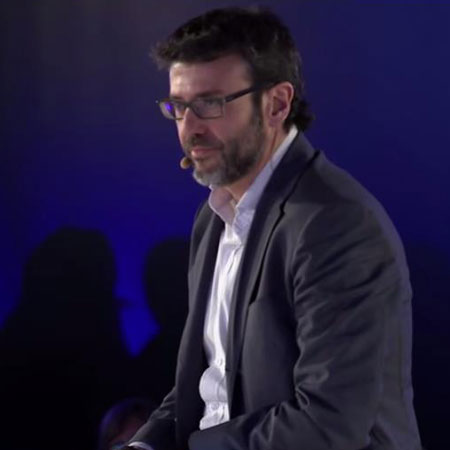
What skills companies look for? Angelo Trocchia, President Unilever Italia, gives advice to young graduates at LUISS Business School

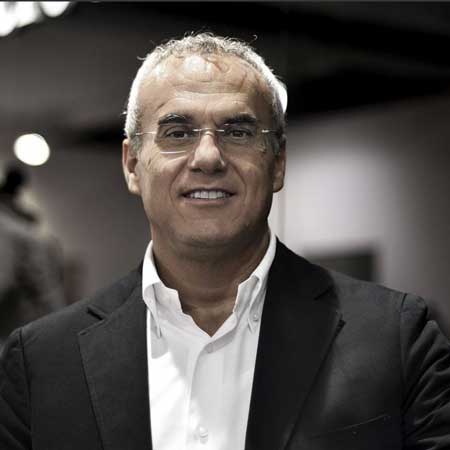
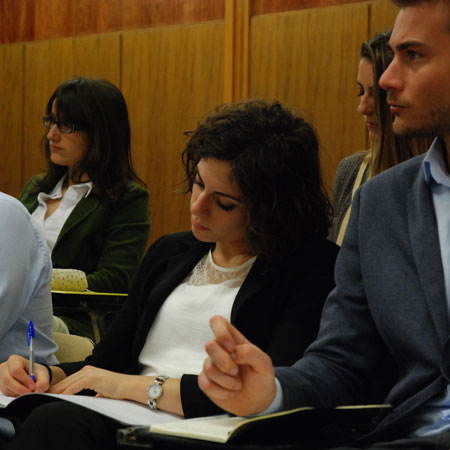
What skills companies look for? Angelo Trocchia, President Unilever Italia, gives advice to young graduates at LUISS Business School. "It is not important who you are today but who you want to become tomorrow”. An encouragement to graduates by Angelo Trocchia, Unilever Italy CEO and President, on June 8 at LUISS Business School during the event dedicated to all Specialised Masters. Unilever Italy, a leader in consumer electronics with a gross revenue of over a billion euros with a prestigious portfolio of brands like Algida, Mentadent, Lipton, Knorr, Lysoform, Dove, Coccolino, is the first choice for graduates looking for a job. The event focused on major current issues for graduates and it was moderated by Vito Sinopoli, Editoriale Duesse President. Angelo Trocchia shared valuable tips during the event, stressing that a strong educational path, an open mind and a great capacity for adaptation  are fundamental in business context. "The educational choices you make" said Unilever Chairman, “are essential. I think that by pursuing an engineering degree first and obtaining  a Master afterwards,  has characterised all my path. It is clear that passion makes you choose but you need to build your own knowledge base. Trocchia’s tips were of great importance that urged all people to adapt to all the quick changes happening in the world, reinvent their selves, and always seek new stimuli in the spirit of the LUISS Business School Masters. The firm Chairman has also stressed the importance of starting work experience, in order to start building your own path. Unilever is located  worldwide  in more than 190 countries with more than 173,000 employees, «Get in discussion. The world is always much bigger than what you think. Don't  ever settle!», this statement was said directly by Angelo Trocchia "I am 53 years old and I don't know what I'll do in the future». A unique opportunity, that took place at LUISS Business School, to discuss how to build future solid firms, due to all the demands and needs of large international companies.

24 June 2015

Do external careers pay off for both managers and professionals?

The highlights of the LUISS BS Competence Centre & Lab for People Management Do external careers pay off for both managers and professionals? Greater inter-organizational mobility is one of the most evident drivers for career transformation. The traditional model – characterized by a full-time permanent job with a single employer – is now increasingly rare and organizational careers are progressively being replaced by temporary contracting arrangements. This implies a fundamental shift in the psychological contract because both parties become aware that the employing relationship is unlikely to last forever. The reasons for such transformations lie both in environmental factors, such as globalization, rapid technological advances, expanding use of outsourcing and delayering, and individual changes in work attitudes and behaviours linked to increasing life span and changing family structures. Contemporary careers are much more fragmented than they used to be, so much so that it is generally claimed that they follow ‘boundaryless career’ arrangements (Arthur and Rousseau, 1996), involving “opportunities that go beyond any single employer”. A key question is weather inter-organizational mobility increases or not career success for both managers and professionals. We recently conducted a study on a sample of 303 fully employed LUISS BS's alumni. We asked respondents to provide us information on their occupational changes, from the oldest to the actual position. 31% of respondents did not move from their first organization and 69% experienced one or more employer changes. Among these, 37% of job movers were employed in five different organizations or more; 18% in four, 26% in three. Only 19% have been employed by two organizations. Our results show that inter-organizational mobility is associated to significantly higher wages for professionals but not for managers. Among the possible explanations of this difference, there is the tendency to consider managers strategically more important than professionals and more difficult to replace. Consequently, the fear to lose key resources on the managerial ladder may spur organizations to apply aggressive retention plans, generally aligning managers’ salary levels to the market. Beside this justification, our result could indicate that firm-specific knowledge and skills (e.g. knowledge about people, organizational procedures, organizational culture, company history, business and products specificity) that are not transferrable across organizations are more relevant for managers than for professionals. In this regard, our findings echo those of scholars who have emphasized the importance of organizational stability for managers’ career success. Hamori and Kakarika’s (2009) study on CEOs found that insiders, who can rely on firm-specific knowledge, progress in their career more rapidly than outsiders who have only general human capital. Our study confirms this view also with regard to salary attainments of middle managers, for whom the value of firm-specific knowledge is likely to be even more relevant given that they perform more specific tasks as compared to top executive roles. This finding provides interesting implications for managers in planning their own career as it invites them to consider with caution the suggestion – increasingly popular in the business press – that advises them to move between employers frequently in order to achieve greater career success. In contradiction to this popular suggestion, our study suggests that organizational stability does not penalize, at least in terms of salary attainments, those managers that stay with their organization, choosing an internal career path. Managerial roles maintain a firm specific component in terms of internalization of firm’s values, leadership model and organizational culture. With regards to professionals, employer changes provide them the opportunity to apply skills and competencies in different industries and organizations, while keeping professional specialization because they greatly depend on occupation-specific knowledge rather than firm-specific knowledge. This is likely to increase individuals’ employability in the external labour market and the value employers are willing to recognize to outsiders for professional roles. This result confirms King et al.’s (2005) view that mobility per se does not increase human capital and employability. As the authors say, “the quality of career capital matters” (p. 986). External careers are successful if employees choose a coherent job mobility that makes it possible to capitalize on subsequent experiences and maintain a clear occupational identity, while job mobility may not increase employability and salary when it leads to the accumulation of a generic body of knowledge at the expenses of depth of expertise. This result also offers interesting implications for organizations as it concerns the management of professionals’ labour relationships. Our study demonstrates that the enactment of external careers pay off for professionals, making this segment of the employee population particularly difficult to retain. This suggests the opportunity for firms to pay more attention to human resources policies specifically targeted towards professionals that may encourage their loyalty to the organization. *This article is an excerpt from: Sammarra, A., Profili, S., & Innocenti, L. (2013). Do external careers pay-off for both managers and professionals? The effect of inter-organizational mobility on objective career success. International Journal Of Human Resource Management, 24(13), 2490-2511. doi:10.1080/09585192.2012.725076 References: Arthur, M. B., & Rousseau, D. M. (1996). The boundaryless career. Oxford University Press. Hamori, M., & Kakarika, M. (2009). External labor market strategy and career success: CEO careers in Europe and the United States. Human Resource Management, 48(3), 355-378. King, Z., Burke, S., & Pemberton, J. (2005). The ‘bounded'career: An empirical study of human capital, career mobility and employment outcomes in a mediated labour market. Human Relations, 58(8), 981-1007.

22 June 2015

Workshop Digital skills and Labor Market

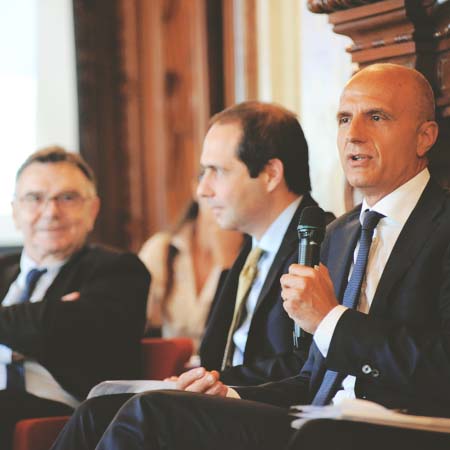
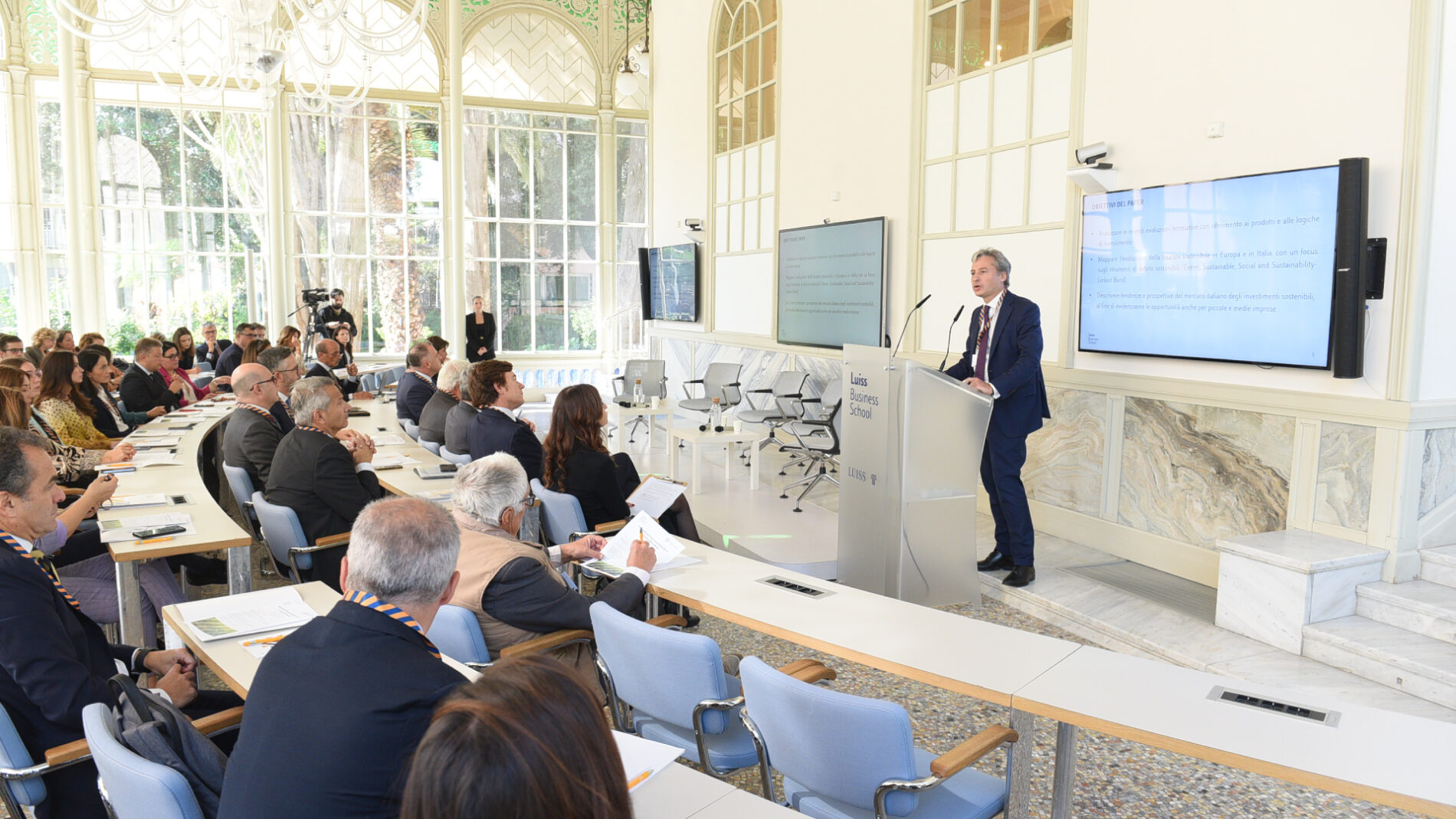
Digital Management: transforming business and public administration Rome, 11 June 2015 LUISS Business School – Sala delle Colonne - Viale Pola 12, Rome (Italy) A new appointment was held on June 11th to talk about “Digital capability and the job market project. Digital Management: transforming business and public administration”, a conference organised by the LUISS BS Competence Centre & Lab Public Administration, Healthcare and Non-profit. The conference focused on the job market and the strategic skills necessary to rule the digitalisation of organisational processes in healthcare, justice, public administration and firms. The experts brought together by LUISS Business School answered the following questions: What are the effects of digital technology in new professions, both in the public and private sector? Which skills and expertise does the job market require of a digital manager? The speakers, moderated by Pierfrancesco Pensosi, Rai journalist, included: Luigi Gubitosi, RAI General Director; Domenico Casalino, CEO CONSIP; Cristiano Cannarsa, CEO SOGEI; Donato Iacovone, EY Mediterranean Managing Partner; Massimo Egidi, Rector of LUISS Guido Carli; Giovanni Lo Storto, General Manager of LUISS Guido Carli University; Franco Fontana, Project Manager LUISS Digital Agenda; Maria Pia Giovannini from AGID. The discussion highlighted the need to improve the supply of digital goods and services and to facilitate access to them within companies and PA's, but also to promote initiatives aimed to increase the digital competence levels of companies, public administration, universities and consumers in order to promote an informed digital culture. According to Franco Fontana, Professor of Economics and Management, companies are increasingly called on to integrate traditional expertise with industrial technologies of telecommunications and Internet. The company structure cannot be separated from the study, setting-up, and running of networks, today representing the primary organisational innovation. Donato Iacovone from EY spoke about the Single Digital Market and presented data to show that a fully functioning single digital market could bring the European economy 415 billion euro per year and could create hundreds of thousands of new jobs. The digital reality represents an opportunity to cut up to 20% of company costs, and digital jobs will be a growing and increasingly important source for employment in the coming years. Luigi Gubitosi, while answering the question "What is the role of RAI in the digital age?" presented RAI's project "#NonèMaiTroppoTardi 2.0", an IT literacy campaign with the aim of educating the use of new media. During the meeting also initiatives launched by LUISS University for the development of strategic skills on digital innovation in Italy were presented: research projects on ICT and Big Data, Master's degrees and specialisations in Management within the Digital Master Degree in Economics and Management, an innovative path for acquiring advanced management and business organisation methods and running the digitalisation of organisational processes in healthcare, justice, public administration and companies.

08 May 2015

Adjunct Professor Recruitment

LUISS Business School invites outstanding candidates to fill the positions of Adjunct Professor in the following disciplines: Finance and Banking Big Data and Cloud Computing Innovation and Operations Management Marketing Leadership, Negotiation, and Organization Ethics, Responsibility, and Sustainability Strategy and Entrepreneurship Statistics and Industrial Economics Project Management Procurement Real Estate Finance Public Management Healthcare and Pharmaceutical Management Public Management Environment Management International Business Tourism Management Social Innovation The starting date is rolling: September 1st, 2015 – February 1st, 2016. The duration of the contract is 3 years delivered in a part-time formula. About the School Located in the heart of Rome, LUISS Business School offers undergraduate and post-graduate programs – including MBA and Executive Education Programs. LUISS BS seeks to create a passion for quality in teaching, learning, and research, and to train individuals with strategic and analytical thinking skills. The vision of the School is reflected in the design of teaching modules and Learning Labs, such as AdVenture Lab and Soft Skill Lab. LUISS BS values its collaboration with the business community: the institutional link with Confindustria – the largest Italian industry association – makes the interaction of the School’s community with the corporate world a common trait of daily life. The School aims to be renowned as an institution of higher education that links rigorous teaching standards with relevant academic and applied research. It has recently started a recruiting campaign to develop its reputation for excellence in research and high quality teaching. You can get more information about Luiss Business School at: http://www.lbs.luiss.it/en/ Application procedure Interested applicants should send the following information to selectionluissbs@luiss.it by May 31st, 2015: Areas of specialization of the candidate (which areas of teaching the candidate intends to cover at LUISS Business School). A Curriculum Vitae using the attached sample A copy of the applicant’s best publications, if applicable. Mandatory criteria: Managerial positions or equivalent professional/consulting experience or previous positions as adjunct professors in a business school Minimum 10 years of working experience. Qualified teaching experience in graduate, post-graduate and executive education. The selected candidates will be required to: teach at least one course per year (minimum 30 hours) in the programs of Luiss Business School and/or the Department of Business and Management of Luiss Guido Carli University. The balance of the teaching activities among different programs will depend on the teaching needs of the School; be available to design and manage executive or custom programs and coordinate master programs. Salary and benefits: competitive salary with a minimum guaranteed; official recognition of the status of extended faculty member of LUISS Business School (website, business card etc).

No articles found