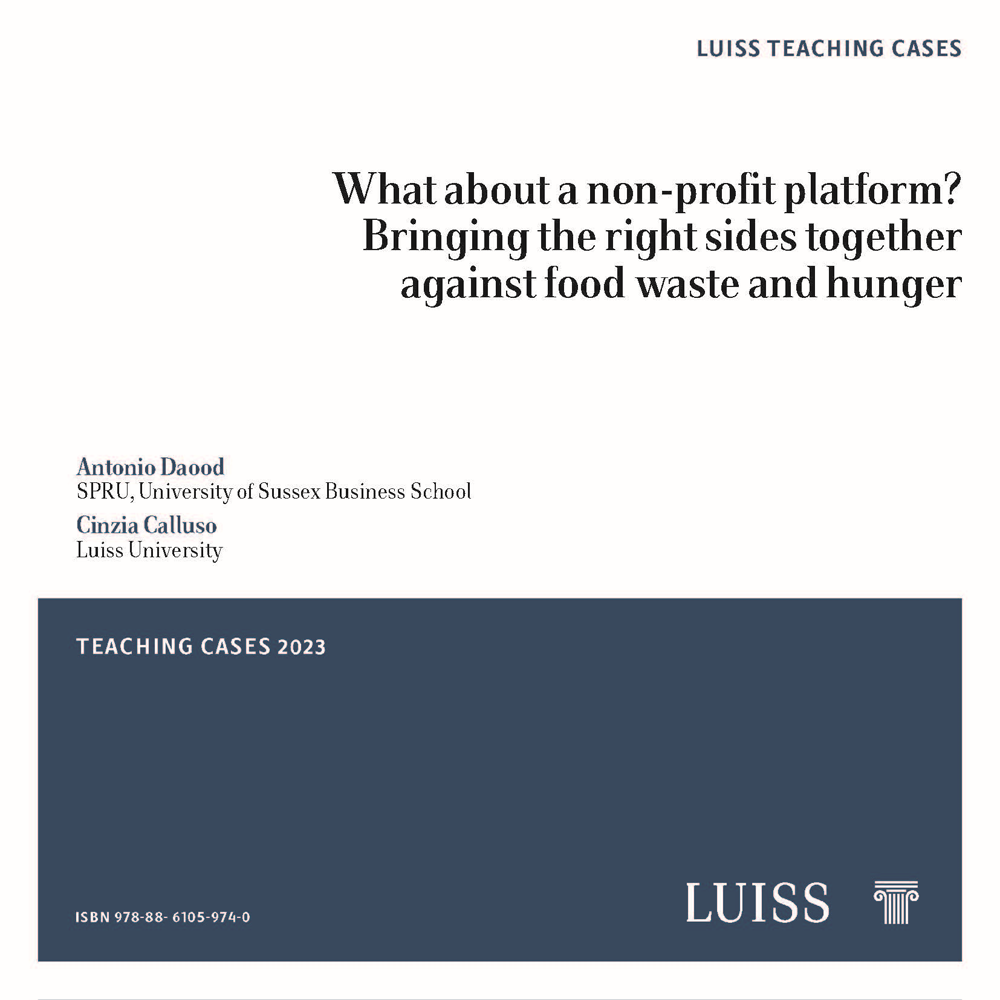
Autori: Antonio Daood, Cinzia Calluso
Abstract:The donation of surplus food has been developing significantly in Italy during the last two decades, but it still represents a smaller fraction of the total amount of food devoted to food aid as compared to the larger amount of food produced exclusively for the purpose – financed through national and communitarian programs (i.e., PEAD1 from 1987 to 2013, FEAD2 since 2014) targeting the Sustainable Development Goals (hereafter, SDG) number 1 (i.e., no poverty) and 2 (i.e., zero hunger). Indeed, these programs provide food aid to the most deprived, along with other basic material assistance (e.g., clothing, and hygiene products) and social inclusion measures (e.g., job assistance). These programs are approved by the Europen Commission and then managed by national authorities. After the production of food is assigned through calls for tender, products are transferred to food banks, from which they are distributed across frontline charities that deliver food aid to the poor. Over time, thanks to the increased attention to the problem of food waste (SDG 12.3), gradual regulatory advances have increased surplus food donation, making it available for providing food aid to people in need (SDG 2).