Brand
Brand
Brand
Brand

30 Ottobre 2025

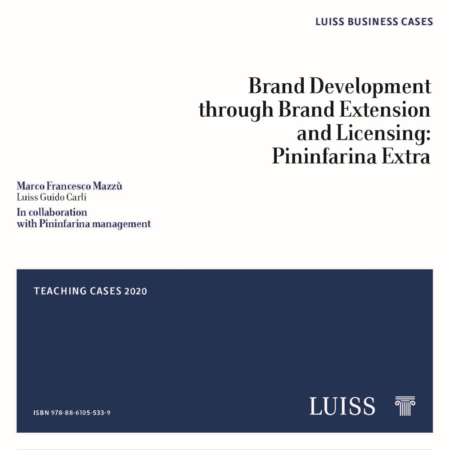
Brand Development through Brand Extension and Licensing: Pininfarina Extra

Autore: Marco Francesco Mazzù In cooperation with Pininfarina Management                                                                                                                                                                                                                                                                  Abstract: Year 2012 started as a key defining moment for Pininfarina Group and its future. In the eyes of the management team, the last five years have been full of hitches. A lot of personal energies have been dedicated to guide the organization through a set of diverse and serious challenges: years between 2007 and 2011 were characterized by the Global crisis of the Automotive sector, main historical focus of the group; some investments in partnership with major OEM did not reach the expected pay-off; the group has been forced to rethink its historical focus of activities, and, even more important, the dramatic death of Andrea in 2008, CEO of the Group at that time, forced an unexpected and unplanned change in leadership an internal governance, including the entrance of the first external members to Pininfarina’s family in top management position. Despite continuing to succeed with its image in the market, as testified by winning several international “best designer” awards, a strong bank intervention has been needed to guarantee company continuity, and sales were not coping up with the expected level to support future growth. In addition, some of the core activities have been divested. It has been clear to the management, that the historical company focus, and the Automotive market was not anymore enough to support a healthy outlook. Something more should also be done to develop other “internal jewels” of the company as Pininfarina Extra (PFE), founded in 1986, and focused on bringing the company’s design culture and comprehension of modern life, culture and social paradigms to other categories of industrial design. However, several growth alternatives were present for PFE, each balancing different opportunities and risks. Would it be better to focus PFE on automotive-related accessories or move it to completely different categories? What would be the product/services that could best fit with Pininfarina heritage and Brand values? Would the development of PFE change the company’s BrandTelling? What would be the most appropriate business model (internal development vs. licensing) and which new competencies should be in place? How to ensure that resources dedicated to this business area would have a positive return both in terms of Brand Equity and financial impact? What elements of the Brand Equity could support this bridge and how would the market react? Every move was apparently a sliding door: every managerial decision, in a moment of scarce resources, could lead to a no-return direction for the company. Download Case Study Richiesta Teaching Notes

30 Ottobre 2025

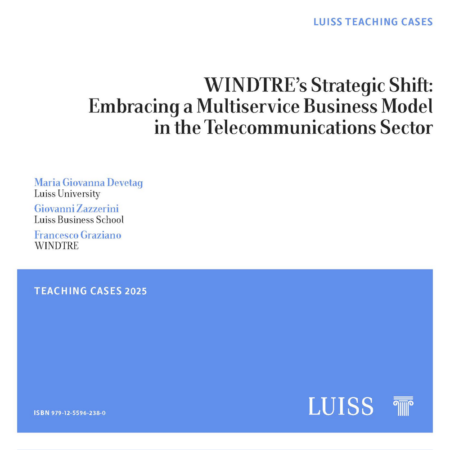
WINDTRE’s Strategic Shift: Embracing a Multiservice Business Modeling the Telecommunications Sector

Autori: Maria Giovanna Devetag, Giovanni Zazzerin, Francesco Graziano                                                                                                                                                                                                                                                                                                                                                                                                              Abstract: This case explores WINDTRE’s strategic shi from a traditional telecom service provider to a diversified multiservice company, incorporating insurance and energy services into its portfolio. The diversification strategy capitalizes on WINDTRE’s robust customer base, technological infrastructure, and market insights, enabling the company to meet broader consumer needs while enhancing value creation. By leveraging cross-selling opportunities, WINDTRE not only increases customer retention but also taps into new revenue streams, mitigating risks associated with a single-industry dependency. This transition highlights the advantages of diversification, including enhanced brand equity, competitive differentiation, and resilience in a dynamic market environment. WINDTRE’s approach exemplifies how telecom operators can successfully evolve into integrated service providers, aligning with consumer demand for convenience and comprehensive solutions. Download Case Study Richiedi Teaching Notes