30 Ottobre 2025
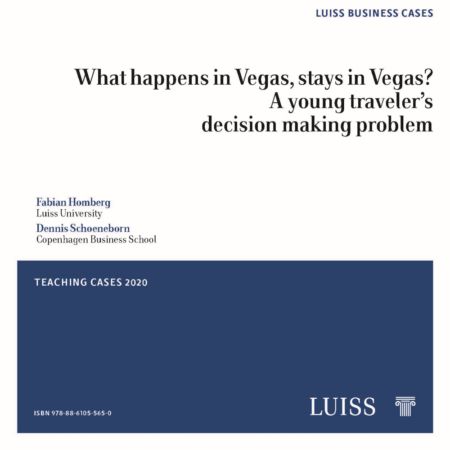
Autori: Fabian Homberg, Dennis Schoeneborn
Abstract:
The case takes us to Las Vegas the capital of gambling in the US. The city is well known for attracting travelers due to its busy night life and casino density. In 2018, Las Vegas had more than 42 million visitors of which 20% indicated their gambling budget is more than USD 600. On weekends, the hotel occupancy rate is 94.5% (see LV Visitor Statistics website for details). Jack, a recent college graduate from rural Wisconsin, travels to Las Vegas. He has booked a standard room. Before travelling he searches the web for information about what to do in Vegas in order to plan his time in the best possible way. While doing this, he comes across a couple of blog entries talking about a so called “$20 sandwich trick”. He finds out that the trick refers to a common tipping practice people apply when checking in into their hotels in Vegas. This is how the trick works: During check-in hotel guests place a dollar note (typically a $20 one) between their credit card and ID (“the sandwich”), hand it over to the receptionist and ask for a complimentary upgrade (e.g., to a room with special amenities or a better view over the strip). The hotel clerk typically takes the sandwich, pockets the money, and sees what s/he can do for the guest. Enthused by the idea to get an upgrade for a low price, Jack really wants to try it when arriving at the hotel. One week later – it’s travel day! He arrives at the Bellagio hotel at 14:30 in the afternoon, and waits in the queue of travelers checking-in. While waiting his thoughts start to float and he thinks about the 20$ trick again. Suddenly he gets this odd feeling of doing the wrong thing – should he really play the $20 sandwich trick? Is it ethically sound? And is playing the trick actually a tip or a bribe?
Download Case Study
Richiesta Teaching Notes