News
News
News
News

14 December 2015

Closed the First Successfull Edition of the Course on how to Improve and Explout the Sport Facilities - LUISS Business School and CONI

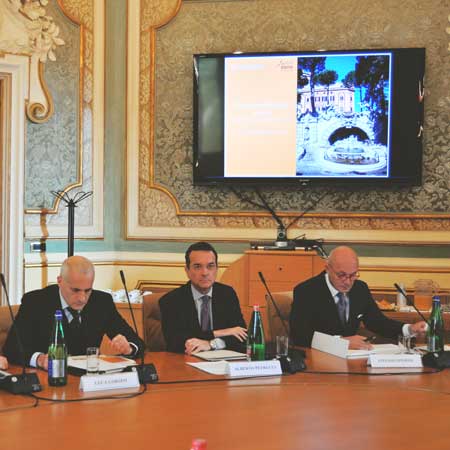
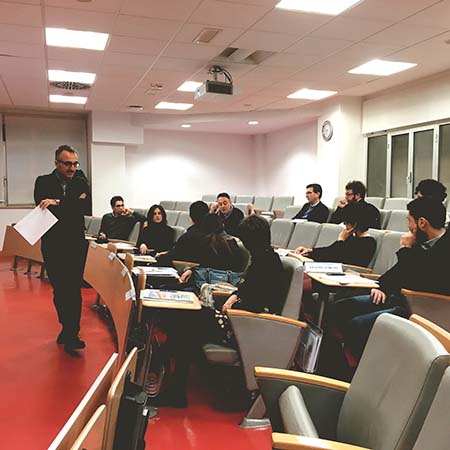
On the last November, 23, 24 and 25 the first edition of the Course "Stadiums and sports facilities: the new frontiers of real estate" hold by LUISS Business School together with CONI. The attenders were all the stakeholders involved: football clubs, sport associations, real estate asset management companies, investment companies, law firms, entrepreneurs and professionals. The sports sector suffers a gap due to the lack of facilities compliant with security and sustainability. The law 147/2013 tries to enhance the sports facilities with economic sustainability. In this changing scenario, the Course was the opportunity to learn new skills and to discuss the most relevant issues. In considerazione del grande successo dell’iniziativa e dell’alto livello delle competenze coinvolte, LUISS Business School e CONI sono già al lavoro per realizzare la nuova edizione in programma nel 2016. L’obiettivo degli organizzatori è che questa iniziativa possa divenire il punto di riferimento per tutti coloro che intendano approcciare con competenza e professionalità questo importante e sempre più rilevante opportunità di business. Becasue of the successs, LUISS Business School and CONI have already started to work at the second edition to be scheduled in 2016. The mission is to become a benchmark for all those who wish to approach with competence and professionalism this important business opportunities.

14 December 2015

The compliance: reflections to go beyond appearance

Alessandro Addotti - MACOM LUISS Business School Co-Director - Partner at Law Firm Addotti&Associates The definition of compliance requires a systematic approach with regard to the organizational way. Compliance must be pervasive in every business environment. The “worst case scenario” as source of costs of not-compliance can be a useful guideline about the advantages of compliance. Compliance consists of rules and applicable laws. However, the definition limits the full organizational commitment which is what compliance means. It isn’t necessary to tick the box in order to define compliance, since it should be a part of the mission and the values of a company, and a potential source of competitive advantage, not simply a budget item. The previous inputs define the arena where compliance operates: in particular, in the Italian legislation, L. 231, AML, corporate governance (mainly in regulated sectors) and safety in the workplace are all rules related to compliance. Compliance also means tax or antitrust issues, as well as the standard of business conduct. Last but not least, the ownership of compliance: it is not enough for a job profile to assure a real best practice in compliance. It should be concrete, operational and measurable. An organizational chart or a system of delegated powers are good practices, but they are not enough. Compliance efforts should aim at integrated compliance (the role of EHS Officer vs Compliance Officer or the relationship between Legal and Compliance) with KPIs in order to measure its performance. With this regard, the relationship between compliance and internal audit is essential: a culture of compliance requires the awareness and the knowledge of the main topics and issues above mentioned. Finally, with regard to the cost of compliance, the most relevant benchmark could be the cost of the not-applied compliance. Although the advantages of compliance are hard to measure, the failure to comply would easily be measured in legal terms.

14 December 2015

Challenges and needs of tourism industry, experts meet in the Corporate Advisory Board at LUISS Business School

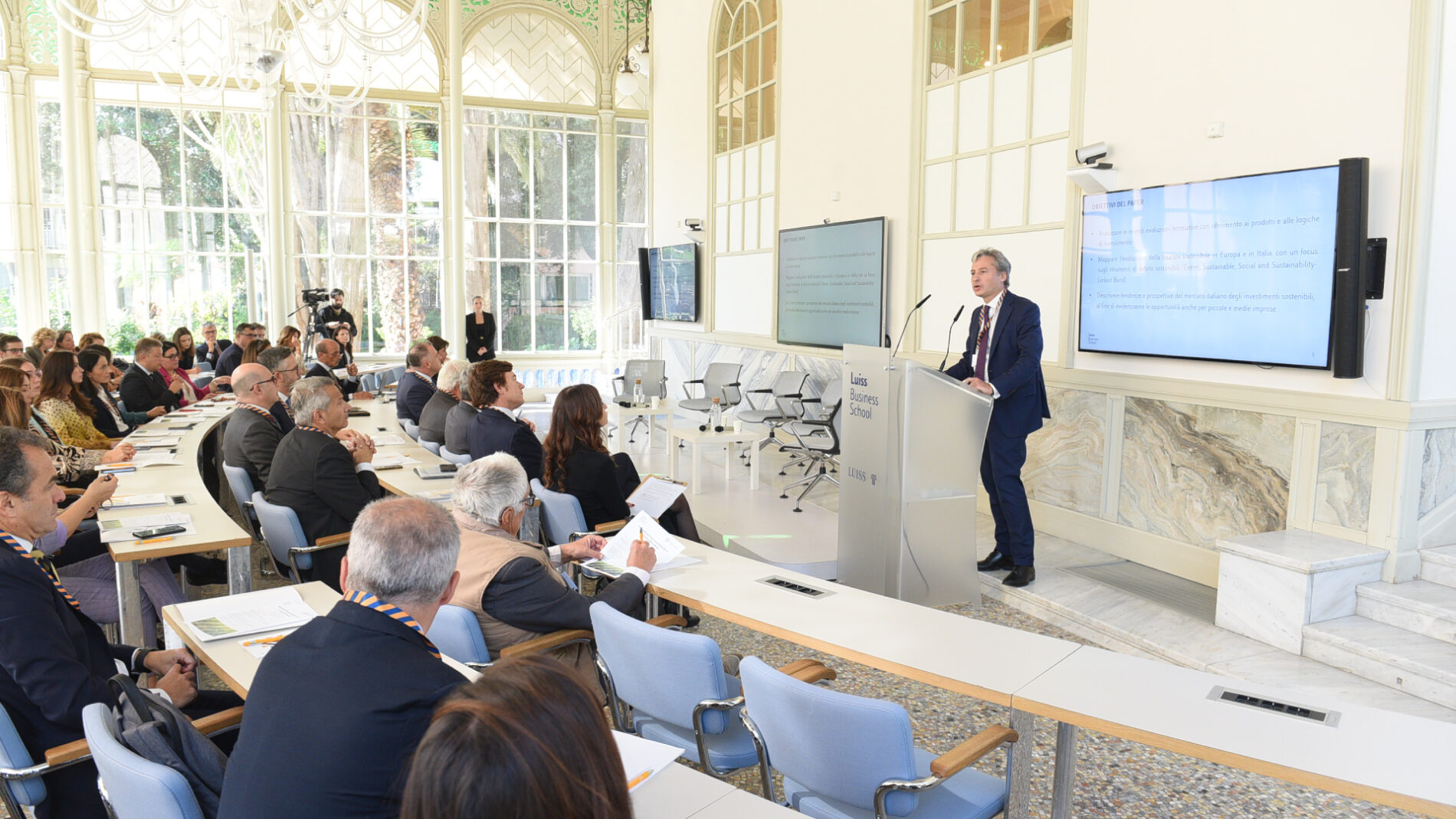
Soft skills, field experience, attention to the territory and human capital are some of the key elements of the Corporate Advisory Board (CAB) of the Master in Tourism Management. LUISS Business School began this process through the involvement of institutions, large corporations, and other stakeholders in the tourism industry to discuss the training programs and rendering them more effective. During the meeting, the debate produced new ideas and new expectations with specific regard to challenges, needs and opportunities in the tourism sector: the need to strengthen soft skills and behavioral attitudes, through lab experience; customer focus, in order to assure a unique touristic experience in line with needs and expectations; the importance of enhancing the territory, the culture, the experience; attention to human capital and operations, where there is direct interaction with employees and customers. The role of CAB aims to establish a strong link between training and the work market. The step forward will be a close co-operation among companies, institutions and other stakeholders, and the Master’s Director, in order to launch experiential seminars aimed to strengthen the technical skills and to allow students to work on their Field Project. Prof. Matteo Caroli, the Master’s Director, with the aim of strengthening the cooperation with corporate partners, announced the launch of a specific Competence Centre in Tourism Industry, in order to focus on applied research for the touristic companies.

11 December 2015

E-Book: Eco-Industrial Parks. A Green and Place Marketing Approach

“Eco-Industrial Parks – A Green and Place Marketing Approach” is a project, which has been co-financed by the European Regional Development Fund. The author of the e-book is Matteo Caroli, Full Professor of International Business at LUISS University and Head of the Knowledge Centre at LUISS Business School, who worked with Marino Cavallo and Alfredo Valentino. During the last few years the transition from a non-sustainable to a sustainable world is becoming the main goal for scholars and practitioners. The extant study shows the centrality of “industry-environment” interactions in this process. Especially, following the idea of natural cycles, industrial ecologists are redefining the industrial facilities and infrastructures to optimize waste management and to reduce global pollution. In this context the most powerful tool is the Eco-Industrial Park. The latter is oriented towards a twisting of classical industrial estate and the establishment of a “system” which consists of business activities, natural sources, energy, raw materials, waste, final products, and labour. According to Lowe and Evans (1995), “the members of eco-industrial park seek enhanced environmental, economic and social performance through collaboration in managing environmental and resource issues”. This book highlights the pivotal role played by eco-industrial parks in this transition process to implement an efficient and sustainable use of materials, energy, and waste. It addresses this interesting and current topic through a theoretical and practical perspective. It gives potentially important managerial implications to formulate marketing strategies to enhance Eco-industrial park’s and place’s attractiveness. Download the e-Book (all rights reserved)

23 November 2015

The new challenges of Procurement Management

(by Riccardo Bini | LUISS Business School) 23/11/2015 The achievement of quality and inexpensiveness in procurement, with particular regard to the investment expenses, imposes a thorough evaluation of the elements that influence the overall cost of a supply during its lifespan, including elements, that in the past have been underestimated, such as the effect on the environment and sustainability. The knowledge of the buying markets, the pricing trends, the competitive factors for adding value to a procurement process are all key factors for success. Budgeting no longer means simply accounting rules: it is evolving to best practices with a continuous monitoring. The new technological tools, such as ERP and e-procurement, that have rendered automatic the buying process, are now opening to new opportunities, such as a marketing-oriented procurement approach, vendor management, suppliers’ KPIs monitoring, even through open source solutions available on smart devices. All the above-mentioned features are very relevant in companies that have already faced a growth, diversification and internationalization process. The Procurement Office acts as a border element between demand and supply and has a key role in the strategic positioning through the negotiation power, the cost control, the increasing level of productivity and sales and quality improvement for the final customer. To this end, an organizational model based on expenditures policies, engineering of processes and activities, monitoring and continuous quality improvement is essential. The mission of the Procurement Office should leverage on all the management tools in order to seize the opportunities from the new competitive environment and the changing technologies. In particular, it should be aimed to: Flat organizational models, that are oriented to the analysis of the strategic processes in demand/supply and to strategies consistent with thr Business’ needs and its time to market, operations and claims (which are more and more outsourced). Design of new buying processes with an early involvement of the Procurement Office, in order to assure the technical set-up of the needs (aligned with the market standards) and of the budget. Minimize the procurement risk, through the strengthening of the suppliers’ portfolio control policies, from the simple quality compliance check to a relevant moment of check of the suppliers’ capabilities. Global oriented procurement, even through the acquisition of certifications, which comply with international training standards, in order to share policies, technical language and networks. Boost of procurement innovation, even through not-conventional policies, such as the cooperation with competitors in no core purchases (consortium buying), the procurement service and the suppliers portfolio as business target market. Opening to the digital revolution, with new technological solutions or the innovation of the existing ones, in order to get a forecast-oriented approach to demand and supply (big data), to launch and run real time “comakership” with suppliers, to monitor the vendor reputation, to develop new kinds of execution (3D printing or augmented reality).

09 November 2015

The launch of Project Organising Competence Centre

(By Andrea Prencipe, POCC Director and Associate Dean for International Development LUISS Business School) On November 4th LUISS Business School has formally launched the Project Organising Competence Centre (POCC) with the aim to promote research, build theory, and support improvements in project practices by forging a close collaboration with industrial partners in Italy and internationally. The POCC reflects a recent growth in research and teaching expertise in project studies within the LUISS Business School and the University at large. It is being established to address a variety of issues concerned with project-based organising in firms and projects, including innovation, learning, capability building, and strategy. The launch event has been well received: academics and project practitioners interacted and shared ideas and information on a variety of themes and topics. Dr. Mark Kozak-Holland delivered a very interesting lecture on impossible projects: using historical case studies, he drew implications and lessons to face current project management challenges. I have then chaired a round table discussion on Impossible Projects: Massimo Debenedetti (Fincantieri) highlighted the challenges for implementing innovation mind-set in a project-based organisation; Lill Von Bork (Ericsson) illustrated the synergistic contribution of tools and people for the delivery of impossible projects. The second round table discussion was centred on the Milan Expo 2015 – literally, an impossible project made possible: Marco Rettighieri (Italfer), Alberto Prina (Telecome Italia), Alessandro Francolini (Ericsson) remarked the importance of effective project management, team work, and effort and commitment of individuals. I should think that the November 4th launch event signed a good start in terms of topic and approach: POCC’s faculty is convinced that by linking industry and academia to co-create new knowledge generate the basis to advance the knowledge frontier in project studies to inform project practices and approaches. POCC and PMI will host the 4th International MegaProjects Workshop on 19-20 May 2016 at LUISS Business School.     9/11/2015

30 October 2015

Recovery in Real Estate and education: a great opportunity

(By Enrico Cestari, Real Estate & Infrastructures area, LUISS Business School) 30/10/2015 The increasing trend in Real Estate brokerage is an important signal for the entire Real Estate sector. The rise in the levels of trust translates in an increased dynamic of the transactions. In particular, the growth of Real Estate sales was 8,2% in 2014 (Source: Nomisma, June 2015), thanks, also, to the banking system which lowered the rigid loan policies. The recovery phase has begun, and it is important to pay attention to the importance of a different mind-set in order to benefit from the opportunities it brings. The increasing complexity and the global competition call for new skills and capabilities. With this regard, education is essential in order to train both the new upcoming junior professionals and  executives with strong professional backgrounds. LUISS Business School offers two kinds of learning experience: EREF – Executive Real Estate Finance, an executive course for those who have already gained a working experience and want to strengthen and improve skills and networks; and MAREF – Master in Real Estate Finance , a post-degree master for young graduates who want to start a career in Real Estate. Starting from this year LUISS Business School’s initiatives connected to the real estate field will be evaluated and validate, form a scientific point of view, by a REAL ESTATE STEERING COMMITTEE composed, besides from the Faculty, by the major professionals of this field, to offer skills and profiles capable of answering to the requirements of a market that is becoming always more complex and competitive.  

29 October 2015

Orlando Ayala: The Real Madrid Digital Transformation.

Orlando Ayala, Corporate Vice President and Chairman, Emerging Markets of Microsoft, will meet students at LUISS Business School on next 3rd November, at 11:45 am for a speech about the strategic partnership that he signed with Florentino Pérez, Chairman of Real Madrid C.F. at the Santiago Bernabéu Stadium. Orlando Ayala will talk about the full commitment of Microsoft to ensuring that people from across the world can make the most of each moment of their lives. Amazing things can happen by providing people with the right tools, just when they need them in order to interact, create or share everything they can imagine. Ayala will focus on the amazing Real Madrid case related to the full digital revolution of the club. This new era translates into an unprecedented personalized experience for supporters that will allow millions of fans from all over the planet to enjoy their passion for Real Madrid anywhere, anytime and on any device. The fans of the club are the real stars of the agreement. Ayala will tell how they built a digital platform that is revolutionizing the way in which Madridistas can follow their team and share their passion for the club. Through cutting-edge technologies, supporters of Real Madrid will be able to access experiences, content and exclusive digital services, either at the stadium, at home or in any other location. A host of online services will provide an enriched experience for watching matches. For instance, supporters of the club will be able to access the stadium virtually, before, during and after each game, selecting the content they want to see when they want to and where they want to see it. The aim of this technological initiative is to make Madridistas the real stars of their own experience by allowing them to view and consume the content they want and also create and share it with their friends on social media and other digital channels. The event will take place on November 3rd, at LUISS Business School - Viale Pola 12, in the MBA class. It will start at 11.45 am and it will finish at 12.45 with a Q&A session when the students will have the great opportunity to interact with Orlando Ayala. Register for the event

No articles found