
23 July 2015
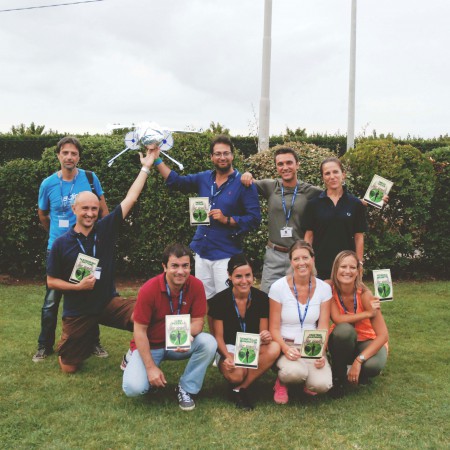
The MBA Cup is an international football tournament for Alumni of the European Business Schools, the initiative of some MBA LUISS students started in 2001; one of the player is the current team captain and professor of Real Estate at LUISS Business School, Alessandro Belli. In the beginning only the most important Italian Business Schools participated: LUISS, Bocconi, Politecnico di Milano, Bologna, CUOA Altavilla Vicentina, however nowadays the championship is assuming a more international profile and maybe one day it could become the “Champions League” of the main European Business Schools. It did not take long before Insead Fointanbleau, IESE Barcellona, Rotterdam SM, Athens, London University in participating in the tournament. This is a unique MBA event in its category in Europe, played in prestigious football stadiums such as Rome Flaminio’s Stadium and the Federal Centre of Coverciano, which is the location of the Italian National football team. The MBA Cup was thought as an important meeting for the MBA environment too, a great opportunity to create and strengthen network. Conferences about Team-building and sport-applied management have always been associated to this sport event, such as the great MBA cup party in Florence during the tenth anniversary of the tournament. Moreover prestigious testimonials such as the “Golden Boy” Gianni Rivera, an Italian National team idol of the Seventies, and the International referee Pierluigi Collina have contributed in the past to set the event under the spotlight. The 2015 edition of the tournament took place in the month of June. Our LUISS BS couldn’t win the cup during the previous editions and this contributed as an additional encouragement for our athletes. The team started winning with a score of 1-0 against MIP and 2-0 against CUOA. The satisfaction arrived after winning against MIB, which were defeated with a 4-0 score. The athletes had a positive feeling: Coach Belli’s players were ready, the team was solid and self-confident. The final match was on Sunday 21st of June, Perugia Stadium is an classic stage of the great events, the opponent of “Bologna Business School” which has a well-trained team with a great attacking game style. The match is breath taking, with many opportunities from both sides, the LUISS BS team had to fight to maintain the score of 3-2 even though they were dominating the match, however Bologna tied last minute and set the score to 3-3. After thirty minutes of extra-time there was no winner, but in the toughest time the “LUISS Business School” spirit emerges, and they become extremely focused and do not miss any penalty shot, despite BBS has already missed one. They arrived to the last penalty shot, the one that will determine the whole match; if the LUISS BS goalkeeper saves the last one the cup will return to Rome were everything has started. The Stadium is silent, everyone is focused on the field and the bleachers, the goalkeeper bended his legs, concentrated, he was aware of the enormous responsibility he had, however his teammate supported him. All of a sudden screaming fill the stadium, LUISS BS players run to celebrate their hero. It’s over! After many years the cup returns to Rome, LUISS BS is the new MBA champion! It’s an unbelievable celebration, all the players exult, the veterans and the young ones, everyone that has played and participated, they’ve never given-up. Even though some of the athletes were injured during the game, they never gave up and continued playing until the end. A great success, a beautiful experience which both winners and defeated will keep as a life memory. Special thanks to all players and to LUISS BS and Assomaster who have always supported with enthusiasm of the organization and the participation of the team. We will see you in 2016!
"Big enough to win, small enough to act quickly and decisively": this is the mission of a company that has marked Italian history and that now wants to mark the global one; this is the self-awareness of a successful industry that humbly recognizes the importance to make always better and faster; this is the example of an entrepreneurial culture that Luca Garavoglia, Chairman of the Campari Group, showed to the MBA classroom in July 13th,2015. The presentation touched two very important topics for our students, entrepreneurship and internationality , defined as key factors for success. The first topic refers as “Everyone can become a CEO” approach, as mentioned by Mr. Garavoglia, or rather the aptitude to predict and make things happen, to be proactive, the ability to establish an objective and the determination to reach it, the ability to choose collaborators and to know how to appreciate people. The second topic refers to the way to make that approach into practice, which is being open-minded, both in new ideas and multiculturalism. Nowadays, it is impossible to think locally and individually if you want to "conquer" the economic world market. According to the Career Service, which tends to instill the value of being entrepreneurs of themselves, the meeting with Mr. Garavoglia was extremely interesting. The students were able to see the positive return that can create entrepreneurship and internationality. They had an example of an industrial reality born locally and that today is ranking among the major players in the global beverage sector; it began as a single-brand company that now boasts a portfolio of more than 50 brands and a presence in 190 countries with leading positions in Europe and America. These results are thanks to the approach and people. “People are the main factor for success” (Luca Garavoglia)
20 July 2015
“Tell me and I forget; Teach me and I remember; Involve me and I learn” (Benjamin Franklin) No more illustrious name could better express the aim that the Career Service pursues organizing seminars and company presentations periodically. It is not only to transfer knowledge and facilitate the creation of network but it is to live a 360° learning experience, sharing professionals’ stories and real business situations, learning through examples of real life. This is what happened in the MBA class last July 1st , 2015. Luisa Todini, Chairwoman of Poste Italiane and Member of the European Parliament, took part in the Corporate Governance lesson. The room was full and there was a full audience involvement. Dr. Todini began by introducing herself, her career path which led her to manage a big group like Poste Italiane. She was an example of a determined and competent woman, but, above all, she is a professional still enthusiastic with her job. A beautiful demonstration for our students about how the passion for your own job and for the opportunity to contribute something important can lead a person, man or woman, to pursue a company retaining its authenticity. The meeting then continued by addressing issues closely related to the lesson of Corporate Governance. Here, Dr. Todini compared the academic knowledge of Corporate Governance with Poste Italiane business model.
16 July 2015
The professional growth of key figures such as project managers, portfolio managers, programme managers and project risk managers, is deeply changing and implies the need for the integration between leadership and soft skills. Since stakeholders have to be the main interpreters of objectives related to business benefits of organisational strategic plans; their role is fundamental. In order to face the deep evolution of these professional figures, the Project Management Institute has decided to keep a new model called ‘PMI Talent Triangle’, aimed to strengthen three key skills: Technical Project Management, Leadership, Strategic and Business Management[1]. At the same time, the PMI has decided to review the entire process to keep the credentials through new criteria of PDU which will start running from next December 2015. LUISS Business School, is very keen towards innovation, research and management issues, therefore it offers a wide range of programmes and workshops aims at acquiring or mantaining the international standards of Project management according to the new guidelines of PMI. [1] http://www.pmi.org/certification/ccr-updates.aspx
The LUISS Business School and the Department of Business and Management have announced five calls for applications for public competitions for the awarding of five research grants in Economics – Management Studies. The research grants will be awarded as part of the 5 research projects. More info
On June 26, 2015 at 12:30 am, LUISS Business School opened its doors to employers. 15 multinational companies from different business sectors (pharma, consulting, consumer goods, energy, fashion, aviation, telecommunications, tobacco) attended the event " MBA Inside 2015". A light lunch initial kicked off an afternoon full of opportunities for our students. Not a job fair but a real opportunity for recruiting employers to know the profiles of our students through 30 minutes interviews, performed directly on campus. At 2pm we began the "marathon" of interviews that ended around 7pm. Some figures at a glance: 15 companies involved, 16 desks set up for interviews, 24 interviewers present, 42 students involved for a total of 136 interviews in a single afternoon. A major achievement if you consider the final goal that Career Service wants to reach by an experience like this. With the constant aim of developing individual potential and exercising their individual talent, the MBA inside is seen as a useful tool for the students to put in practice all the suggestions collected during the year: know what you want, understand how to achieve it, get the right tools, put as much as passion and commitment to obtain it. Through several interviews, students are trained to talk about themselves and their expectations, they ‘breathe’ the atmosphere of different corporate functions and build a personal network. Last but not least, they learn to manage their emotions without losing spontaneity and in many cases get interesting job offers. "For the things we have to learn before we can do them, we learn by doing them. (Aristotele)”
15 July 2015
Thanks to the PT MBA partner Accenture, we are glad to offer to the Part Time MBA students an exclusive and exciting opportunity to explore and experience the EXPO 2015 in Milan, welcomed in the prestigious Accenture Strategy Lounge. MBA students will be hosted by Accenture managers and guided through the Sustainability itinerary that will expose the tourers to the most innovative technologies in a wide range of topics such as smart city, connected homes, digital agricultures and more. This will be an incredible opportunity to redesign a career from a sustainability perspective. Thanks to a “digital safari” and through Accenture digital companies clients, they will also have the possibility to meet employers, managers and C-level professionals.
06 July 2015
More than 15 companies have participated at the Corporate Advisory Board of the Master in Human Resources and Organisation, which took place on Friday 19th of June at LUISS Business School. In this context, the HR Managers met the LUISS BS Master representatives in order to discuss about what are the competences and the features which are required the most with the purpose of working in the environment of Human Resources in order to help LUISS Business School to design a programme that meets the companies’ needs. The Master will provide valued skills that will support the students’ employability. Emiliano Cappuccitti, HR Director Birra Peroni, has highlighted the importance of “cross culture”, that is the attention in managing the cultural differences and specific working methods: “Negotiations are often complicated by cultural gaps which arise from different behavioural schemes, rooted in the business practices. Therefore, companies need to assume specific knowledge in relation to different cultural backgrounds of partners: the awareness of the cultural distance could come out as an important competitive advantage for the company, which wants to avoid waste of time and misunderstandings”. Cristina Morena, HR Talent Manager & HR Business Partner Adriatic Zone Sud, has stressed the importance of assuming the HR methods use for the development of Business Intelligence systems: “In order to answer market needs, and to get the opportunity to play a strategic and central role in the organisation, HRM should find a way to make business models more goal-oriented in order to drive innovation and support efficiently business activities. Strategic choices of companies are progressively more subject to data and HR analysis, and consequently the HRM should have tools to analyse and evaluate data in order to provide information to top managers in an automatic and customised way”. Paola Giampaolo, Advisor Academy Formazione Manageriale e sviluppo della leadership Corporate University, asserted how organisations need leaders with listening ability, and empathy and engagement skills which people management activities require: “To be successful in communication and in negotiation in every setting, without compromising interpersonal relations, it urges to assimilate and develop appropriate active and emphatic listening abilities by a constant practice and through adequate techniques”. Alessandro Bernardini GSE HR Director, stresses on the different performance of people who work with commitment and who merely do the job: “Many HR Directors and HR managers are valid touchstones who concretely meet new company needs, bringing innovation, efficiency, productive and useful actions”. Michele Tripaldi President AIDP Gruppo Lazio and Vice President National AIDP, spoke in praise of the importance of no-profit. “80% of the labour demand in our Country comes from SMEs which very often do not own HR department. Technology could play a key role in order to help the SMEs by giving them another voice. It is one of the biggest challenges for Human Resources”. Mauro Boreggio, Chief Human Resources Officer Cementir Holding Spa, has noticed that hiring people in the strategic variable field has two implications: the first is to have a clear understanding of how to operate on Human Resource management which is an essential requirement in order to reach the company’s strategic goals the second one is the necessity to find indicators to measure and evaluate the variables related to people. “A strategic management of Human Resources must set procedures to renew values and competences with the aim to optimise business performance. It is important to place side by side project management experts in order to implement the company processes and focus on collaboration and leadership”. Luciano Sale, Wind Telecommunications HR Director, and Tiziana Mennuti, RDS HR Director, have illustrated as in Italy and in the rest of Europe the importance to be prepared for the Digital Transformation which today represents one of the growth drivers for the most of the SMEs. According to them, Social Network, smartphone, e-commerce and digital marketing have revolutionised the way of communicating and selling. Running the digital transformation in a multinational framework, which has managed for many years an activity of communication and sale in a traditional way, make the HR team face the challenges in creating an organisational structure able to answer peculiar digital dynamics needs and in shaping digital professional to understand and fully exploit the “digital tools” offered by social networks. “Nowadays we need to reflect on the deep transformations generated by digital technology in company organisational framework and in different business models”. Special thanks for their participation to: Paolo Baggioni, DHR, Money Gram International Alessandro Bernardini, HR Director, GSE S.p.A Mauro Boreggio, Chief Human Resources Officer, Cementir Holding Spa Emiliano Cappuccitti, HR Director, Birra Peroni Ornella Chinotti, Managing Director, CEB Paola Giampaolo, PResponsible Academy “Formazione manageriale e sviluppo della leadership”, Corporate University PosteItaliane Tiziana Mennuti, HR Director, RDS Cristiana Morena, HR Talent Manager COFELY Gdf Suez & HR Business Partner Area Adriatica Sud Olga Ragucci, Sales & Marketing IH, Unilever HR BP Paolo Rozera, Executive Director, Unicef Luciano Sale, HR Director Wind Telecomunicazioni Michele Tripaldi, President AIDP Gruppo Lazio, and Vice President AIDP
Paolo Boccardelli, Dean LUISS Business School, has showed the outcome of the survey “The Italians and the Networked Society On 19th and 20th June 2015, Ericsson, world leader in the rapidly changing environment of communications technology, has hosted the 16th edition of its annual event We are All Change Makers, one of the most distinguished events in Italy in which representatives of telecommunication companies and Institution, as well as researches and young talents, debate about the Digital Transformation. The event focused on how the ICT transformation has changed the citizens’ life, the company’s choices and the society as a whole. The companies’ representatives, opinion leaders and members of digital start-ups have highlighted that the innovation can (and must) support the Country’s social, cultural and economic development; they have also showed that each one can be part of this change. Paolo Boccardelli, Dean LUISS Business School, has showed the outcome of the survey “The Italians and the Network Society”, developed by LUISS Business School and Ericsson with the aim to understand the perceptions of Italians about the impact of Networked Society in specific sectors of social life in order to foster improvements in the economy, social life and environment. (VIDEO). “The extraordinary renovation of our society, known as Digital Transformation, is based on the possibility to completely digitalise the consumers’ experience, together with the companies and inside the companies. The consumers expect to live experiences, both of goods and of services, and to have customised services, even from a digital point of view” has affirmed Paolo Boccardelli. “The survey we have developed with the LUISS Business School shows how Italians firmly believe in the digital transformation” has claimed Clara Pelaez, Head of Strategy, Marketing and Communication Region Mediterranean Ericsson, “our task is to meet the citizens’ needs and drive the change through a synergic collaboration that can support the innovation and improve the national economic system”. Transformation is already underway. It is driven by mobility, broadband, and cloud system, and will lead the Society to become a Networked Society, where all things that can benefit from an internet connection will be linked, providing advantages to society, companies, environment and making people able to realise anyone’s potential and to create a sustainable future[1]. Jeremy Rifkin, economist and President of the Foundation on Economic Trends, during his speech “A smart green digital Europe” has stressed that the internet technology and renewable energy are merging to create a powerful "Third Industrial Revolution”. “We have been talking for a long time about the coming Networked Society, a moment where the connectivity would change anyone’s life. Now that mobility, broadband, and cloud system are rapidly spreading all over the world, we are in front of a deeply transformation era” have explained Nunzio Mirtillo, CEO Ericsson Italy and President of Region Mediterranean Ericsson. “The ICT is significantly contributing to this evolutionary process in which we can all play a leading role. The change generated by this transformation is, ineed, in everyone’s hands and for this reason, we firmly believe that it is essential to collaborate with professionals, companies, institutions and young innovators in order to guide the society development and accelerate the digitalisation process in our Country”[2]”. The event on Storify. [1] Ericsson press release, 20 June 2015, tr. LUISS BS. [2] Ericsson press release, 20 June 2015, tr. LUISS BS.
03 July 2015
On 10/12 September 2015, LUISS Business School will host s@lute, the first Forum of Digital Healthcare designed with the aim to foster dialogue on the crucial issue of Health from a digital point of view. A high-profile event, divided in thematic sessions, panel discussions and workshops, offering a new approach on the future of the healthcare. A pragmatic approach, in line with the Ministry of Health and with the objectives of the Digital Agenda, which will involve many stakeholders such as: media, institutions and government agencies, academics and other experts, hospitals and clinics, companies, associations and citizens. More info
02 July 2015
Values, passion and product quality are the key factors of NeroGiardini strategy. During the LUISS BS Executive MBA, Enrico Bracalente, a successful entrepreneur that launched the brand NeroGiardini, talked about his personal and professional history and explained the success of his brand: NeroGiardini. With a turnover that reaches more than 204 million Euro and with over 3,5 million pairs of shoes produced per year, NeroGiardini is today one of the excellence of the made-in-Italy. Enrico Bracalente does not forget his roots and the small firm where he has started from: “In the beginning, we have started an artisan business in the underground of a church, there were no other places available to run our business”. The firm grew fast and the idea to be independent from suppliers and to create a shoes collection made of original and high-quality products become a reality. The turning point was in the ’90s, when the globalisation offered the chance to offshoring abroad in countries with competitive production costs. “At the end of the ‘90s, when all the world praised the offshoring, I firmly said that I wanted to undertake the opposite path”, says Bracalente. The entrepreneur, proud and satisfied of his choice, explains that the reason that guided this decision was the attention to the human capital. “We have chosen to not relocate, because the experience, the quality and the profitably of our employers was incomparable. The real force and the richness lie in people who work and collaborate with us”. As the NeroGiardini strategy showed, it is possible to be competitive producing in the Italian country and, above all, it is possible to make the made-in-Italy production a distinctive brand which guarantees quality and reliability: “We buy raw material exclusively from Italian suppliers. We succeeded in communicating our vision and NeroGiardini is today immediately identified as a made-in-Italy brand. The attention to the consumers and to their needs both in the price and in the quality of the products, in addition to the Italian production and the high qualified employees, are at the base of the company success. “To satisfy our average consumer needs, we produce affordable and quality products”. Last but not least, the communication. At the end of the ‘90s, Bracalente paid more and more attention to marketing and communication activities. After many years the entrepreneur explains how this was the winning choice that has contributed to the brand awareness. “Nowadays, in Italy the real crisis is represented by the “brand lack. Adapting your business to ever-changing needs investing in communication has been a forward-looking decision. I believe that communication activities represent a great investment and not a cost for companies”. With regard to the near future challenges, Bracelente strategy is clear: “The crisis must not be suffered, the crisis must be faced. Now, we are willing to internationalise the company, a goal that after becoming leader in Italy’s market is now achievable. To make this step in the opposite way would have meant starting to build a house from the roof instead of the ground”.
30 June 2015
The next selection day of LUISS Business School MBA and Master Programmes has been scheduled on July 9th, 2015. The admission test can be held on-campus at 10 am, or off-campus (via Skype) at 2 pm. For any further information about the selection process and the documents required, please write to recruitmentluissbs@luiss.it or call (+39) 06 85 22 5046.
24 June 2015
What skills companies look for? Angelo Trocchia, President Unilever Italia, gives advice to young graduates at LUISS Business School. "It is not important who you are today but who you want to become tomorrow”. An encouragement to graduates by Angelo Trocchia, Unilever Italy CEO and President, on June 8 at LUISS Business School during the event dedicated to all Specialised Masters. Unilever Italy, a leader in consumer electronics with a gross revenue of over a billion euros with a prestigious portfolio of brands like Algida, Mentadent, Lipton, Knorr, Lysoform, Dove, Coccolino, is the first choice for graduates looking for a job. The event focused on major current issues for graduates and it was moderated by Vito Sinopoli, Editoriale Duesse President. Angelo Trocchia shared valuable tips during the event, stressing that a strong educational path, an open mind and a great capacity for adaptation are fundamental in business context. "The educational choices you make" said Unilever Chairman, “are essential. I think that by pursuing an engineering degree first and obtaining a Master afterwards, has characterised all my path. It is clear that passion makes you choose but you need to build your own knowledge base. Trocchia’s tips were of great importance that urged all people to adapt to all the quick changes happening in the world, reinvent their selves, and always seek new stimuli in the spirit of the LUISS Business School Masters. The firm Chairman has also stressed the importance of starting work experience, in order to start building your own path. Unilever is located worldwide in more than 190 countries with more than 173,000 employees, «Get in discussion. The world is always much bigger than what you think. Don't ever settle!», this statement was said directly by Angelo Trocchia "I am 53 years old and I don't know what I'll do in the future». A unique opportunity, that took place at LUISS Business School, to discuss how to build future solid firms, due to all the demands and needs of large international companies.
The highlights of the LUISS BS Competence Centre & Lab for People Management Do external careers pay off for both managers and professionals? Greater inter-organizational mobility is one of the most evident drivers for career transformation. The traditional model – characterized by a full-time permanent job with a single employer – is now increasingly rare and organizational careers are progressively being replaced by temporary contracting arrangements. This implies a fundamental shift in the psychological contract because both parties become aware that the employing relationship is unlikely to last forever. The reasons for such transformations lie both in environmental factors, such as globalization, rapid technological advances, expanding use of outsourcing and delayering, and individual changes in work attitudes and behaviours linked to increasing life span and changing family structures. Contemporary careers are much more fragmented than they used to be, so much so that it is generally claimed that they follow ‘boundaryless career’ arrangements (Arthur and Rousseau, 1996), involving “opportunities that go beyond any single employer”. A key question is weather inter-organizational mobility increases or not career success for both managers and professionals. We recently conducted a study on a sample of 303 fully employed LUISS BS's alumni. We asked respondents to provide us information on their occupational changes, from the oldest to the actual position. 31% of respondents did not move from their first organization and 69% experienced one or more employer changes. Among these, 37% of job movers were employed in five different organizations or more; 18% in four, 26% in three. Only 19% have been employed by two organizations. Our results show that inter-organizational mobility is associated to significantly higher wages for professionals but not for managers. Among the possible explanations of this difference, there is the tendency to consider managers strategically more important than professionals and more difficult to replace. Consequently, the fear to lose key resources on the managerial ladder may spur organizations to apply aggressive retention plans, generally aligning managers’ salary levels to the market. Beside this justification, our result could indicate that firm-specific knowledge and skills (e.g. knowledge about people, organizational procedures, organizational culture, company history, business and products specificity) that are not transferrable across organizations are more relevant for managers than for professionals. In this regard, our findings echo those of scholars who have emphasized the importance of organizational stability for managers’ career success. Hamori and Kakarika’s (2009) study on CEOs found that insiders, who can rely on firm-specific knowledge, progress in their career more rapidly than outsiders who have only general human capital. Our study confirms this view also with regard to salary attainments of middle managers, for whom the value of firm-specific knowledge is likely to be even more relevant given that they perform more specific tasks as compared to top executive roles. This finding provides interesting implications for managers in planning their own career as it invites them to consider with caution the suggestion – increasingly popular in the business press – that advises them to move between employers frequently in order to achieve greater career success. In contradiction to this popular suggestion, our study suggests that organizational stability does not penalize, at least in terms of salary attainments, those managers that stay with their organization, choosing an internal career path. Managerial roles maintain a firm specific component in terms of internalization of firm’s values, leadership model and organizational culture. With regards to professionals, employer changes provide them the opportunity to apply skills and competencies in different industries and organizations, while keeping professional specialization because they greatly depend on occupation-specific knowledge rather than firm-specific knowledge. This is likely to increase individuals’ employability in the external labour market and the value employers are willing to recognize to outsiders for professional roles. This result confirms King et al.’s (2005) view that mobility per se does not increase human capital and employability. As the authors say, “the quality of career capital matters” (p. 986). External careers are successful if employees choose a coherent job mobility that makes it possible to capitalize on subsequent experiences and maintain a clear occupational identity, while job mobility may not increase employability and salary when it leads to the accumulation of a generic body of knowledge at the expenses of depth of expertise. This result also offers interesting implications for organizations as it concerns the management of professionals’ labour relationships. Our study demonstrates that the enactment of external careers pay off for professionals, making this segment of the employee population particularly difficult to retain. This suggests the opportunity for firms to pay more attention to human resources policies specifically targeted towards professionals that may encourage their loyalty to the organization. *This article is an excerpt from: Sammarra, A., Profili, S., & Innocenti, L. (2013). Do external careers pay-off for both managers and professionals? The effect of inter-organizational mobility on objective career success. International Journal Of Human Resource Management, 24(13), 2490-2511. doi:10.1080/09585192.2012.725076 References: Arthur, M. B., & Rousseau, D. M. (1996). The boundaryless career. Oxford University Press. Hamori, M., & Kakarika, M. (2009). External labor market strategy and career success: CEO careers in Europe and the United States. Human Resource Management, 48(3), 355-378. King, Z., Burke, S., & Pemberton, J. (2005). The ‘bounded'career: An empirical study of human capital, career mobility and employment outcomes in a mediated labour market. Human Relations, 58(8), 981-1007.
Executive Sales Management Programme LUISS Business School and EY have designed an ambitious project in order to develop the skills on customer partnership and sales management. More than 60 Senior Managers of EY have been selected and involved in this programme, which is entirely customised and designed according to company needs and distinctive sales’ competencies. The programme will last six months and will combine method and experience, lectures and coaching. It consists of: 3 classroom sessions of two days each; a Field Project aimed to propose a solution to increase efficiency and to enhance the value proposition of EY; a coaching path made by Partners to support Senior Managers; an “on the job” experience along with the participation of "Sales Campaign" together with the Business Development EY Team; meetings with Customers and relevant testimonials regarding the topics covered in the lectures; material and business cases shared in a common digital platform. At the end of the programme, on 28th January 2016, will take place the event in which all Field Projects will be presented to the Management Leadership Team EY and an to the LUISS/EY Evaluation Commission.
22 June 2015
On July 23rd, LUISS BS will take place the Open Evening event dedicated to LUISS Business School Specialised Masters. Suitable spaces will be set up for informational discussions with programmes directors and coordinators to provide information on the Master programmes, admission procedures and services. Participants will have the opportunity to receive individual guidance service related to possible post-graduate courses which will help to understand what programme suits them best in order to achieve their career goals. Moreover, participants will take interviews with the Career Service Staff and have the chance to make an admission test simulation. All of the programmes offer an excellent education combined with field-project experience. The topics are related to professional profiles programme outcomes, with the aim of helping and guiding all those interested in choosing their own educational path, based on effective talents and needs. Register Now